Blog
The Ultimate Guide to Deadheading Flowers for a Non-Stop Summer Display
Learn why, when, and how to deadhead flowers in your summer garden. Keep your blooms looking beautiful and encourage continuous flowering all season long.
2026-05-12
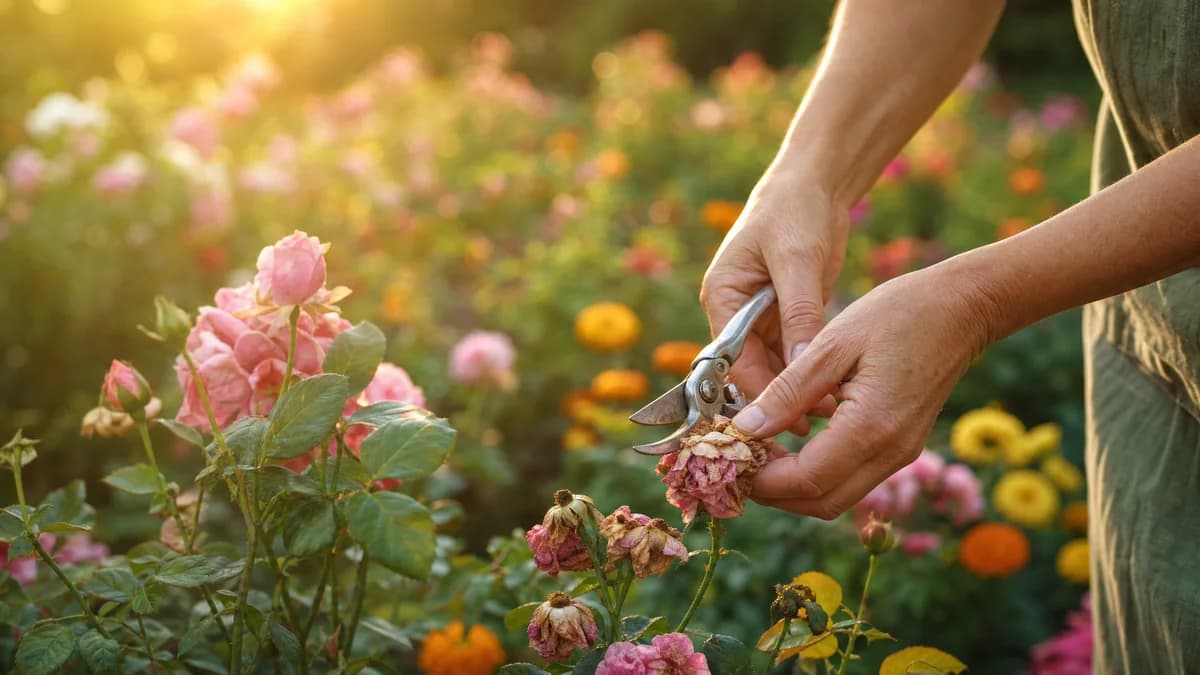
As May warms up into early summer, your garden is likely bursting with color. The early blooms have put on their show, and now the real work of summer maintenance begins. If you want your garden to keep producing those stunning flowers well into autumn, there is one crucial task you need to master: deadheading.
Deadheading might sound like a chore, but it is actually one of the most relaxing and rewarding garden tasks. Grab your morning coffee, step out into the garden, and let's talk about how to keep those blooms coming.
What is Deadheading and Why Do We Do It?
Deadheading is simply the process of removing faded or dead flowers from your plants. When a flower fades, the plant's natural instinct is to start producing seeds. Seed production takes an enormous amount of energy—energy that could otherwise be used to grow more roots, leaves, and most importantly, *more flowers*.
By snipping off the spent blooms before they can go to seed, you are tricking the plant into trying again. The plant thinks, "Oh no, I didn't reproduce! I need to make another flower." This results in a much longer blooming season and a generally tidier-looking garden.
How to Deadhead Correctly
The technique varies slightly depending on the type of plant, but the general rule is simple: remove the flower and its stem down to the next lateral leaf, bud, or stem.
If you just pull off the petals or the very tip of the flower head, you will leave behind an ugly, headless stem sticking up. Not only does this look messy, but it can also invite disease.
Tools for the Job
While you can pinch many soft-stemmed flowers (like marigolds or petunias) with your fingers, having a good pair of pruners or floral snips makes the job much easier and cleaner for thicker stems.
I highly recommend a sharp, comfortable pair of bypass pruners. If you are looking for a reliable pair, these Fiskars Bypass Pruning Shears are a fantastic choice that will last for years.
Which Flowers Should You Deadhead?
Not all flowers need deadheading, but many of our summer favorites respond incredibly well to it.
The "Must-Deadhead" List
* Zinnias: These are cut-and-come-again champions. The more you cut them, the more they bloom.
* Marigolds: Pinching off the faded blooms keeps the plants bushy and flowering until frost.
* Roses: Regular deadheading (cutting back to a five-leaflet leaf) is essential for repeat-blooming varieties.
* Petunias and Calibrachoa: While many modern varieties are "self-cleaning," giving them a light trim or deadheading the stubborn spent blooms keeps them looking fresh.
* Dahlias: Deadheading is critical to keep the massive blooms coming.
* Cosmos: Keep snipping these delicate flowers to encourage a continuous, airy display.
Plants That Don't Need Deadheading
Some plants are "one and done," meaning they only bloom once per season regardless of what you do. Examples include peonies and many spring-flowering bulbs (though you should remove the seed heads so energy goes back to the bulb). Others, like many modern impatiens and begonias, drop their own spent flowers naturally.
When to Stop Deadheading
As late summer turns to fall, you might want to *stop* deadheading certain plants. If you want to collect seeds for next year, you have to let the flowers go to seed! Additionally, many flowers, such as coneflowers (Echinacea) and sunflowers, produce seed heads that provide crucial food for birds like goldfinches during the winter. Leaving these standing adds wonderful winter interest to the garden.
FAQ
Q: Can I just use scissors to deadhead?
A: For very thin, soft stems, regular scissors can work in a pinch. However, garden snips or bypass pruners are much better as they make a clean cut without crushing the stem, which helps prevent disease.
Q: What do I do with the deadheaded flowers?
A: Throw them straight into the compost bin! Unless the plant was diseased, spent flowers make excellent compost material.
Q: How often should I deadhead?
A: It depends on the plant and the weather, but generally, a quick walk through the garden once or twice a week is sufficient to keep on top of it.
*Disclosure: As an Amazon Associate I earn from qualifying purchases.*
Ready to Design?
Upload a photo of your space and get beautiful, personalized design ideas in seconds.
Keep reading
Seasonal planting reminders and expert guides — free.