Blog
How to Grow Swiss Chard: The Leafy Green That Beats the Summer Heat
When spinach and lettuce bolt in the July heat, Swiss chard keeps producing. Learn how to grow this beautiful, heat-tolerant leafy green in your summer garden.
2026-07-13
By mid-July, most gardeners have said a sad goodbye to their leafy greens. The spinach bolted weeks ago, the lettuce turned bitter, and the arugula is a distant memory. The summer heat is simply too much for these cool-weather crops.
But what if I told you there is a leafy green that actually *enjoys* the summer heat, produces continuously for months, and looks absolutely stunning in the garden?
Enter Swiss chard.
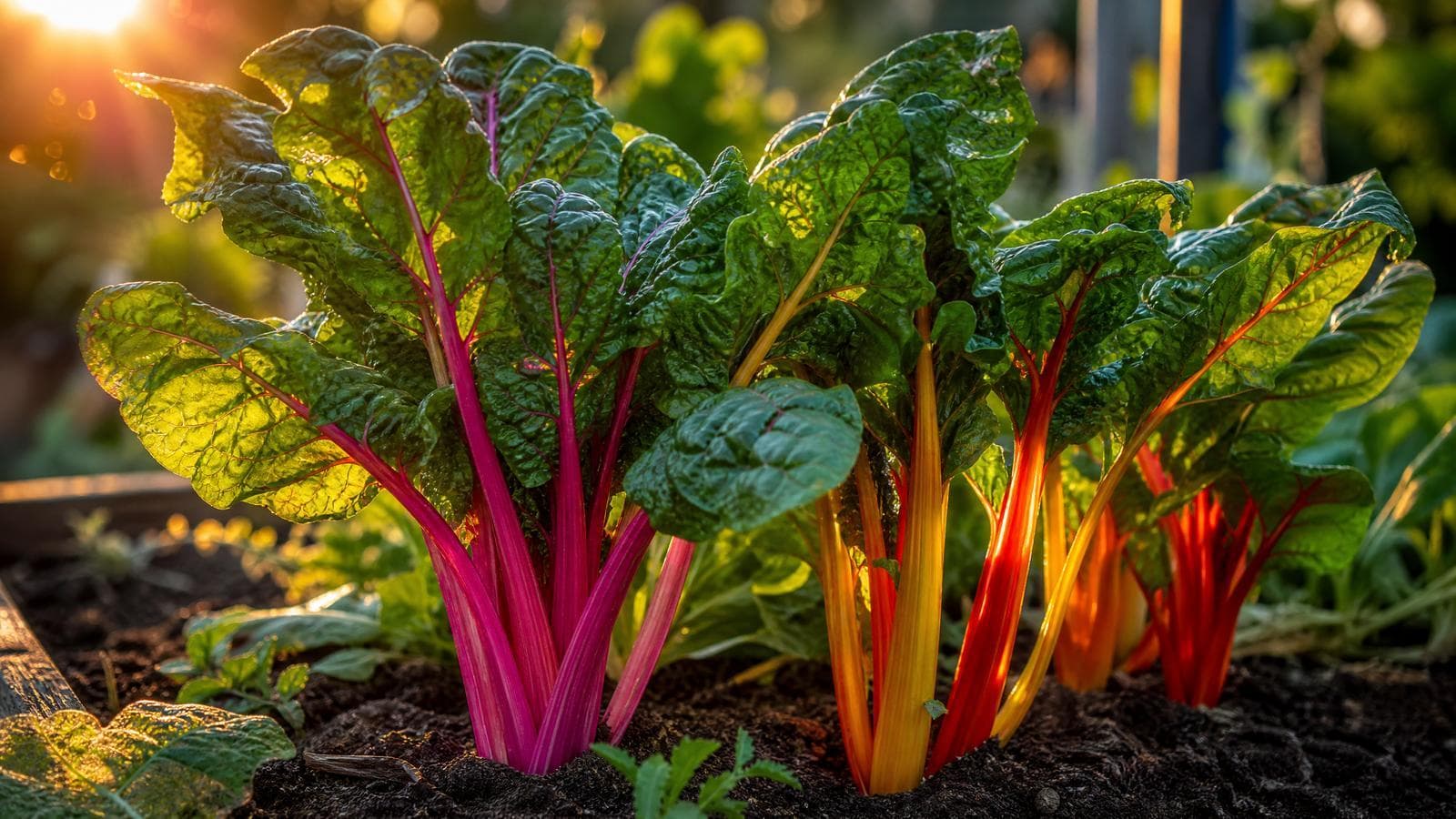
As a master gardener, Swiss chard is my secret weapon for continuous summer harvests. It is incredibly heat-tolerant, highly nutritious, and the vibrant neon stems of varieties like 'Bright Lights' make it beautiful enough to grow in your front yard landscaping. Here is everything you need to know to grow Swiss chard this summer.
Why Swiss Chard is a Summer Superstar
Swiss chard (Beta vulgaris) is actually in the same family as beets, but it is grown for its large, crinkly leaves and crunchy stems rather than its roots.
Unlike lettuce, which goes to seed (bolts) the minute temperatures hit 80°F, Swiss chard has a deep taproot that allows it to pull moisture from deep in the soil, making it incredibly drought and heat-tolerant. It will happily produce fresh, tender leaves right through July and August, and will even survive the first light frosts of autumn.
How to Plant Swiss Chard
While it is often planted in the spring, mid-July is an excellent time to sow a fresh crop of Swiss chard for late summer and fall harvesting.
1. Soil Preparation:
Chard isn't overly fussy, but it prefers well-draining soil rich in organic matter. Work a few inches of compost into the top layer of your soil before planting. It prefers a soil pH between 6.0 and 7.0.
2. Sowing the Seeds:
Chard seeds are actually "seed clusters" (just like beet seeds), meaning each bumpy little seed you plant will likely sprout 2 or 3 separate plants.
* Plant the seeds about 1/2 inch deep.
* Space the seeds about 4 to 6 inches apart.
* Water gently but thoroughly.
3. Thinning (Crucial Step!):
Because each seed cluster produces multiple seedlings, you *must* thin them once they are a few inches tall. Use a pair of small scissors to snip the weakest seedlings at the soil line, leaving the single strongest plant every 8 to 12 inches. (Don't throw the thinnings away—they are delicious microgreens for your salad!)
> Master Gardener Tip: If you want a visual showstopper, buy a seed mix like Check Price on Amazon. It produces stems in neon pink, yellow, orange, red, and white.
Summer Care and Maintenance
Swiss chard is remarkably low-maintenance, but it does need a little help during the peak of summer.
* Watering: While drought-tolerant, the leaves will become tough and bitter if the plant is completely parched. Aim for about 1 inch of water per week. A thick layer of straw mulch around the base of the plants will help retain moisture and keep the roots cool.
* Pests: Chard is generally pest-resistant, but leafminers can occasionally be an issue. These tiny insects lay eggs inside the leaf, and the larvae tunnel through, leaving winding white trails. If you see this damage, simply cut off the affected leaf and throw it in the trash (not the compost).
* Fertilizing: A mid-summer side-dressing of a balanced, organic fertilizer like Check Price on Amazon will encourage rapid, continuous leaf production.
How to Harvest Swiss Chard (The "Cut and Come Again" Method)
The best thing about Swiss chard is that you don't harvest the whole plant at once. You use the "cut and come again" method.
When the leaves are 6 to 10 inches tall, use a sharp knife or pruners to cut the outermost, oldest leaves at the base of the stem (about an inch above the soil). Leave the smaller, inner leaves intact to continue growing. The plant will rapidly push out new growth from the center, providing you with a continuous harvest for months.
Swiss chard is incredibly versatile in the kitchen. The young leaves can be eaten raw in salads, while the mature leaves are fantastic sautéed with garlic and olive oil, much like spinach.
If you are looking for a way to fill the empty gaps in your garden left by bolted spring crops, Swiss chard is the answer. Need help figuring out where to tuck it in? Upload a photo of your garden to our Garden Designer for instant layout suggestions!
***
*As an Amazon Associate I earn from qualifying purchases.*
***
Frequently Asked Questions
Can I eat the stems of Swiss chard?
Absolutely! The stems are crunchy and slightly sweet, similar to celery. Because they are thicker than the leaves, chop them up and start cooking them in the pan about 5 minutes before you add the leafy greens so everything finishes cooking at the same time.
My Swiss chard leaves have holes in them. What is eating them?
If the holes are large and jagged, it is likely slugs or snails, which feed at night. If you see tiny, winding white tunnels *inside* the leaf tissue, that is leafminer damage.
Will Swiss chard survive the winter?
It depends on your zone! Swiss chard is a biennial, meaning its natural life cycle spans two years. In zones 7 and warmer, it will often survive the winter and begin growing again in the early spring before finally sending up a flower stalk and dying. In colder zones, it will die back after the first hard, deep freeze.
Ready to Design?
Upload a photo of your space and get beautiful, personalized design ideas in seconds.
Keep reading
Seasonal planting reminders and expert guides — free.