Blog
The Mid-Summer Pruning Guide: Boost Your Vegetable Yields
Is your summer garden turning into an overgrown jungle? Learn which vegetables need mid-summer pruning to increase airflow, reduce disease, and boost your harvest.
2026-07-13
By mid-July, the neat, orderly garden you planted in May has likely transformed into an impenetrable jungle. Tomato vines are sprawling into the walkways, squash leaves are smothering their neighbors, and you can barely find the cucumbers.
While lush growth is a sign of a healthy garden, too much foliage can actually hurt your harvest. Dense canopies restrict airflow (inviting fungal diseases) and block sunlight from reaching ripening fruit. As a master gardener, I rely on mid-summer pruning to keep plants healthy and redirect their energy from growing leaves to producing fruit.
Here is your guide to mid-summer pruning for the most common vegetable crops.
Tomatoes: The Rule of the Bottom Third
Indeterminate tomatoes (the vining types that grow all season) are notorious for taking over. By mid-July, they need serious management.
What to prune:
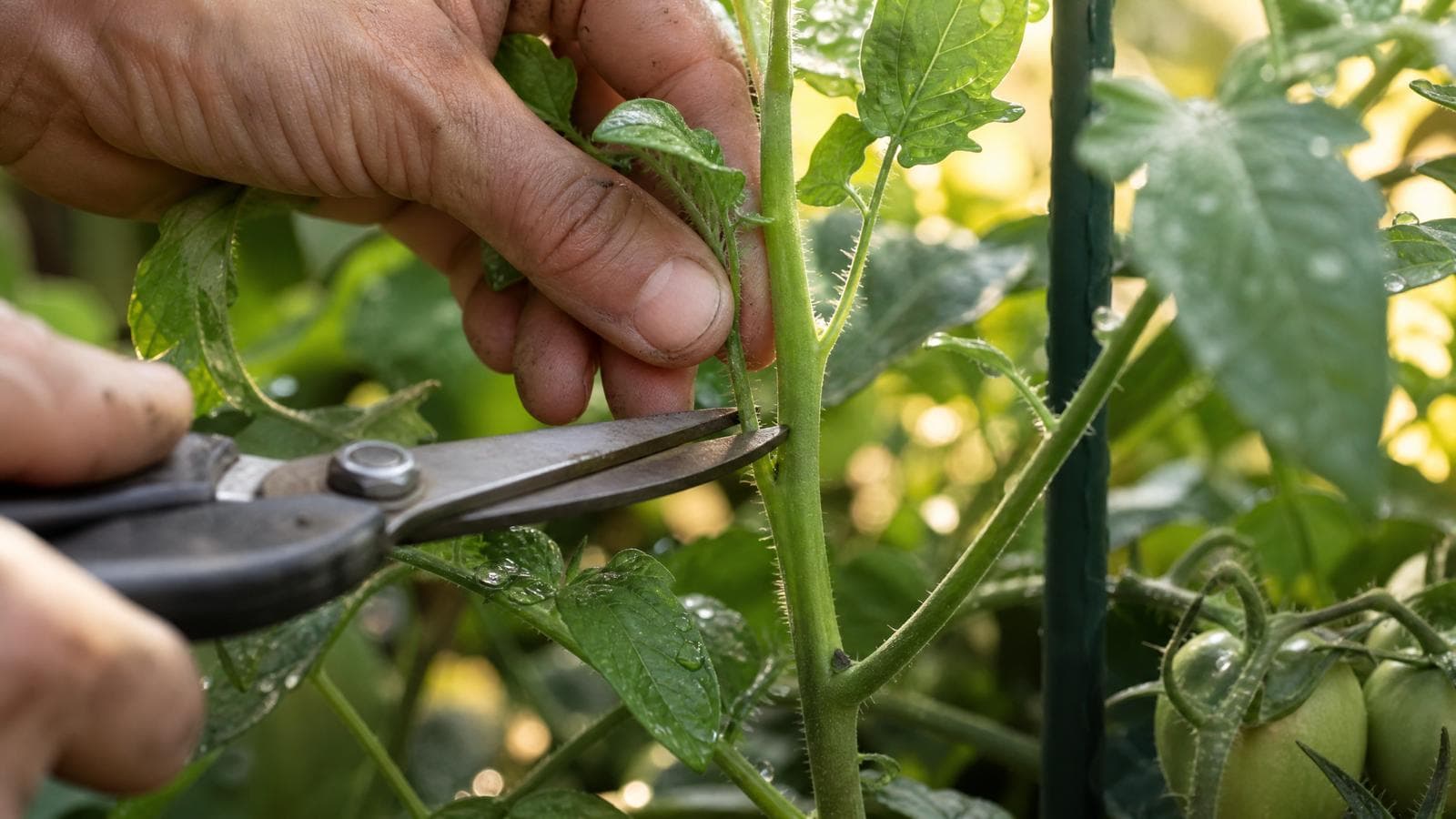
1. Suckers: Continue snapping off the small shoots that grow in the "V" joint between the main stem and the branches.
2. The Bottom Third: This is the most crucial mid-summer step. Remove all leaves and branches from the bottom 12 to 18 inches of the main stem.
Why it matters: Soil-borne fungal diseases (like Early Blight and Septoria Leaf Spot) splash up onto the lowest leaves during rain or watering. By removing the bottom foliage, you create a physical barrier against disease and dramatically improve airflow around the base of the plant.
> Master Gardener Tip: Always use clean, sharp bypass pruners to avoid crushing the stems. I have used my Check Price on Amazon for over a decade, and they are worth every penny for clean, disease-free cuts.
Zucchini and Summer Squash: Opening the Canopy
Summer squash plants produce massive, umbrella-like leaves that shade out everything beneath them—including the flowers that need to be pollinated.
What to prune:
Look for the oldest, largest leaves at the base of the plant. These are often yellowing, tattered, or showing the first signs of powdery mildew. Use your pruners to cut these stalks cleanly as close to the main stem as possible. You can safely remove 3 to 5 large leaves per plant each week.
Why it matters: Removing these massive leaves opens up the center of the plant. This allows bees to easily find and pollinate the flowers, and it allows the sun to reach the developing fruit. It also drastically reduces the humidity trapped under the canopy, which is the primary cause of powdery mildew.
Cucumbers: Taming the Vines
If you are growing cucumbers on a trellis, they will eventually reach the top and cascade back down in a tangled mess.
What to prune:
* Lateral vines: Focus on a single main leader vine. When lateral vines (side shoots) develop, pinch them off just after the first female flower (the one with the tiny cucumber at the base) and the first leaf following it.
* Dead/Yellowing leaves: Remove any leaves near the bottom of the trellis that are turning yellow or brown.
Why it matters: This forces the plant to put energy into developing the cucumbers that are already formed, rather than endlessly growing new, unproductive vines.
If your vines are slipping, a good roll of soft garden tie wire is essential. The Check Price on Amazon is gentle on the stems and holds heavy vines securely.
Peppers: To Prune or Not to Prune?
Unlike tomatoes, peppers generally do not require heavy mid-summer pruning. Their canopy naturally shades the developing fruit, protecting it from sunscald.
What to prune:
Only remove branches that are touching the soil, or leaves that are visibly diseased or yellowing. If the plant is incredibly dense and the inner leaves are dropping due to lack of light, you can selectively thin a few inner branches to improve airflow.
The Golden Rules of Summer Pruning
1. Never prune wet plants: Water acts as a highway for bacteria and fungi. Only prune when the leaves are completely dry to prevent spreading disease.
2. Sanitize your tools: Wipe your pruner blades with rubbing alcohol between plants, especially if you are removing diseased foliage.
3. Don't overdo it: Never remove more than 30% of a plant's foliage at one time. The plant still needs leaves for photosynthesis!
Pruning can feel intimidating, but it is one of the most effective ways to ensure a strong late-summer harvest. If you aren't sure where to make a cut, snap a photo of your tangled plant and upload it to our Garden Designer or ask the community in our Chat for guidance!
***
*As an Amazon Associate I earn from qualifying purchases.*
***
Frequently Asked Questions
What should I do with the diseased leaves I prune off?
Never put diseased foliage (like tomato leaves with blight or squash leaves with powdery mildew) in your home compost pile. Most home composts do not get hot enough to kill the fungal spores. Bag them up and put them in your municipal trash or yard waste bin.
Can I prune my determinate (bush) tomatoes?
No! Determinate tomatoes grow to a set height, produce all their fruit at once, and then die. If you prune the suckers or branches off a determinate tomato, you are directly cutting off your harvest. Only remove dead or diseased leaves touching the soil.
Is it too late to prune if my garden is already overgrown?
It is never too late to improve airflow! Start slowly by removing the dead, yellowing, and lowest-hanging leaves first. Wait a few days to let the plant recover, and then do some selective thinning if necessary.
Ready to Design?
Upload a photo of your space and get beautiful, personalized design ideas in seconds.
Keep reading
Seasonal planting reminders and expert guides — free.