Blog
How to Attract Pollinators to Your Vegetable Garden
Boost your vegetable yields this summer by transforming your garden into a pollinator paradise. Learn which plants attract bees, butterflies, and beneficial insects.
2026-05-14
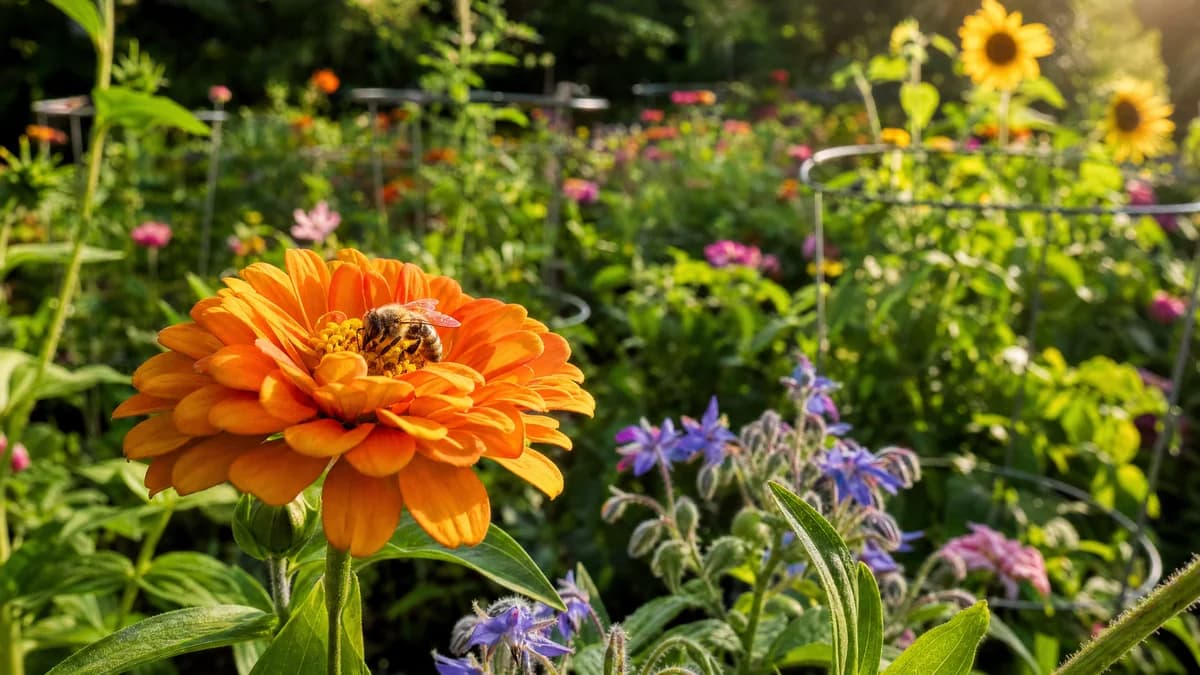
Have you ever watched your squash plants produce dozens of beautiful yellow blossoms, only to see them shrivel and fall off without ever forming a single zucchini? Or perhaps your cucumber vines are lush and green, but the fruit is sparse and misshapen?
As a master gardener, I hear this frustration all the time. The culprit is almost always the same: a lack of pollinators.
Many of our favorite summer crops—including tomatoes, peppers, eggplants, squash, cucumbers, and melons—rely heavily on bees, butterflies, and other beneficial insects to move pollen from flower to flower. Without these hard-working garden helpers, our harvests will always fall short.
Let's look at how you can turn your vegetable patch into a bustling pollinator paradise!
Why Your Vegetable Garden Needs Flowers
It might seem counterintuitive to take up valuable vegetable-growing space with flowers, but I promise you it's the best investment you can make for your harvest. Vegetables alone simply don't bloom long enough or produce enough nectar to sustain a healthy population of pollinators throughout the season.
By planting a diverse array of flowers alongside your vegetables, you create a reliable food source that keeps the bees and butterflies coming back day after day. When your vegetable crops finally do bloom, the pollinators will already be there, ready to get to work.
The Best Flowers for the Vegetable Garden
When choosing flowers to attract pollinators, focus on varieties that are rich in nectar and pollen, and try to select plants with different bloom times so there is always something flowering in your garden.
Here are some of my absolute favorites to interplant with vegetables:
- Sweet Alyssum: This low-growing annual produces a carpet of tiny, honey-scented white flowers that attract hoverflies and tiny parasitic wasps (which are incredible at controlling aphids!).
- Zinnias: These bright, cheerful flowers are a magnet for butterflies and larger bees. They bloom all summer long and make excellent cut flowers.
- Borage: If you want to attract bumblebees, plant borage! The brilliant blue, star-shaped flowers are a bee favorite, and the plant is a classic companion for tomatoes and strawberries.
- Sunflowers: Not only do they look stunning towering over your vegetable beds, but sunflowers provide a massive landing pad and abundant pollen for a wide variety of bees.
- Cosmos: These delicate, daisy-like flowers attract bees, butterflies, and beneficial insects like lacewings.
Let Your Herbs Bolt
One of the easiest ways to feed pollinators is simply to let some of your herbs go to flower (also known as bolting).
While we usually pinch off the flowers of basil, cilantro, and dill to keep the leaves tasting their best, allowing a few plants to fully bloom is a game-changer. The tiny clusters of flowers on blooming dill, fennel, and cilantro are absolute magnets for beneficial insects. Next time your cilantro starts to bolt in the summer heat, leave it be and watch the pollinators swarm!
Create a Welcoming Habitat
Food is only part of the equation. To keep pollinators around, you need to provide a welcoming environment.
Provide Water: Bees and butterflies get thirsty, too! Create a simple "bee bath" by filling a shallow dish with water and adding pebbles or marbles so the insects have a safe place to land and drink without drowning.
Ditch the Pesticides: This is crucial. Broad-spectrum pesticides (even organic ones) cannot tell the difference between a pesky aphid and a helpful honeybee. If you must treat a pest problem, choose highly targeted methods and apply them late in the evening when pollinators are less active.
Leave Some Bare Soil: Did you know that many native bees are solitary and nest in the ground? Leaving a few small patches of unmulched, undisturbed soil gives them a safe place to build their homes.
The Pollinator Payoff
If you take the time to plant a few zinnias among your peppers or let a basil plant go to flower, you will be amazed at the difference it makes. Not only will your garden be more beautiful and vibrant, but your vegetable yields will soar.
If you're looking for an easy way to get started, I highly recommend picking up a regional wildflower seed mix. The Eden Brothers Regional Wildflower Seed Mixes are fantastic and tailored to thrive in your specific climate.
Happy gardening, and bee kind to our buzzing friends!
---
FAQ
Do I need to plant flowers every year?
It depends on what you plant! Annuals like zinnias and cosmos will need to be replanted each year (though they often self-seed). Perennials like coneflower, bee balm, and lavender will return year after year, providing a permanent food source for pollinators.
What colors attract the most bees?
Bees have excellent color vision, but they see the world differently than we do. They are particularly drawn to blue, purple, violet, white, and yellow flowers.
Are wasps beneficial to the garden?
Yes! While they might be intimidating, many wasps are incredible predators that hunt caterpillars, grubs, and other garden pests. They also act as minor pollinators as they visit flowers for nectar.
---
*Disclosure: As an Amazon Associate I earn from qualifying purchases.*
Ready to Design?
Upload a photo of your space and get beautiful, personalized design ideas in seconds.
Keep reading
Seasonal planting reminders and expert guides — free.