Blog
Companion Planting for Natural Pest Control This Spring
Learn how to use companion planting to naturally deter pests and boost your garden's health this spring. Practical tips from a master gardener.
2026-05-17
Hello again, garden friends! As the weather warms up and our mid-May gardens really start to take off, there's a less welcome arrival we all have to deal with: pests. From aphids to squash bugs, the insects are waking up and looking for a meal.
But before you reach for the heavy-duty sprays, let's talk about one of my absolute favorite, time-tested gardening strategies: companion planting. Think of it as creating a neighborhood watch program right in your garden beds. By strategically placing certain plants next to each other, you can naturally deter pests, attract beneficial insects, and create a healthier, more resilient garden ecosystem.
Let's look at some practical, easy-to-implement companion planting strategies you can use right now.
The Magic of Marigolds
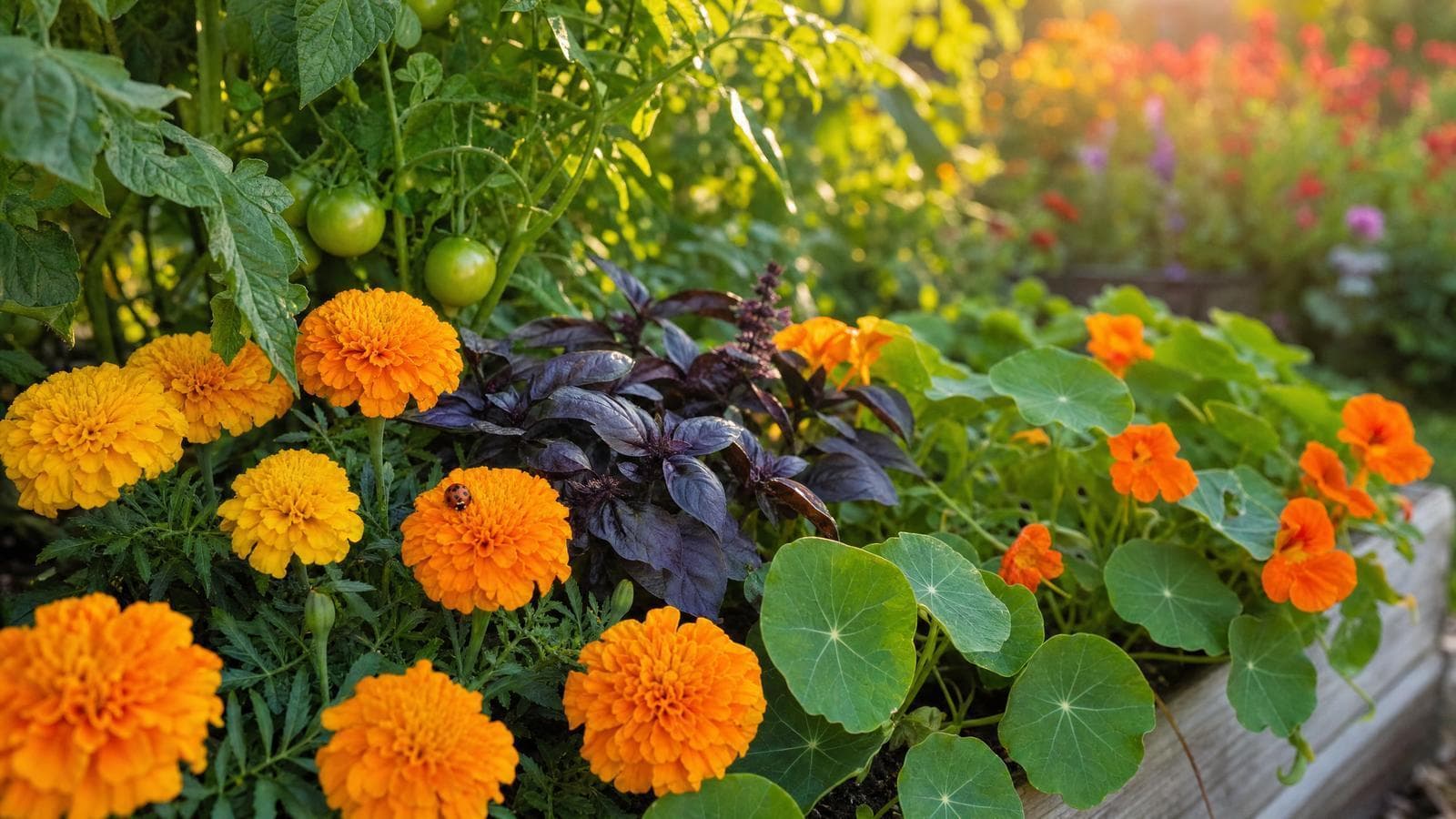
If you only plant one companion flower this spring, make it the humble marigold. These cheerful little powerhouses are famous for their pest-deterring properties.
Marigolds release a scent that confuses and repels many common pests, including nematodes in the soil, tomato hornworms, and even some species of aphids. I always tuck French marigolds around the borders of my tomato and pepper beds. Not only do they work hard below and above the soil, but they also add a beautiful pop of color.
If you haven't started any yet, it's not too late. You can easily find starts at your local nursery, or grab a pack of French Marigold seeds (As an Amazon Associate I earn from qualifying purchases) to sow directly into the warm soil.
Basil and Tomatoes: The Classic Duo
They taste perfect together on a plate, and they grow perfectly together in the soil. Planting basil alongside your tomatoes is a classic companion planting technique that every gardener should try.
The strong, pungent aroma of basil helps to mask the scent of the tomato plants, making it harder for pests like the tomato hornworm to find their target. Some gardeners also swear that planting basil near tomatoes improves the flavor of the tomatoes themselves! Plus, having your basil right next to your tomatoes makes harvesting for that summer Caprese salad incredibly convenient.
Nasturtiums: The Beautiful Decoy
Nasturtiums are stunning, sprawling flowers that serve a very specific purpose in the companion planted garden: they are an excellent "trap crop."
A trap crop is a plant that you actually *want* the pests to eat. Nasturtiums are highly attractive to aphids. By planting nasturtiums near your prized vegetables (like your brassicas or beans), the aphids will flock to the nasturtiums, leaving your vegetables alone.
Once the nasturtiums are covered in aphids, you can simply pull the plant and dispose of it, or leave it as a buffet for ladybugs, which will naturally arrive to feast on the aphids. If you want to add these to your garden, climbing nasturtium seeds are incredibly easy to grow.
Alliums for Defense
The allium family—which includes onions, garlic, chives, and leeks—are fantastic defenders of the garden. Their strong scent is highly off-putting to a wide variety of pests, including carrot rust flies, aphids, and even some larger pests like deer and rabbits.
Planting a border of chives around your greens or interplanting garlic near your roses or fruit trees can provide an excellent natural shield. Plus, chive blossoms are beautiful and attract beneficial pollinators to the garden.
Attracting the Good Guys
Companion planting isn't just about repelling the bad bugs; it's also about inviting the good ones in. You want to create a welcoming environment for beneficial insects like ladybugs, lacewings, and parasitic wasps, which are the natural predators of many garden pests.
Plants with small, umbrella-like clusters of flowers are highly attractive to these beneficial insects. Think dill, fennel, yarrow, and sweet alyssum. I always let a few of my dill plants go to flower specifically to feed the good guys. If you want to actively boost your garden's defenses, you can even introduce beneficial insects directly, like ordering live ladybugs for the garden.
Building a Community
The key to successful companion planting is diversity. A garden that contains a wide variety of vegetables, herbs, and flowers is naturally more resilient than a garden planted with just one type of crop.
So this week, as you're planting out those last few summer crops, take a moment to tuck in some herbs and flowers alongside them. Your garden will be healthier, more beautiful, and much easier to manage.
Happy planting!
---
Frequently Asked Questions (FAQ)
Q: Can I plant marigolds with any vegetable?
A: Marigolds are generally great companions for most vegetables, especially tomatoes, peppers, and eggplants. However, it's best to keep them away from beans, as they can sometimes inhibit bean growth.
Q: What should I NOT plant next to tomatoes?
A: Avoid planting tomatoes near members of the brassica family (cabbage, broccoli, cauliflower) as they can stunt the tomatoes' growth. Also, keep them away from corn, as the tomato fruitworm and the corn earworm are the same pest.
Q: How close do companion plants need to be to work?
A: For pest deterrence, the plants should be quite close to each other, usually within 1 to 2 feet, so their scents and root systems can interact effectively.
*Disclosure: As an Amazon Associate I earn from qualifying purchases.*
Ready to Design?
Upload a photo of your space and get beautiful, personalized design ideas in seconds.
Keep reading
Seasonal planting reminders and expert guides — free.