Blog
The Mid-Summer Fertilizer Guide: Giving Your Vegetables a Second Wind
By mid-July, heavy feeders like tomatoes and peppers have depleted the soil. Learn exactly what, when, and how to fertilize your summer garden for a massive late-season harvest.
2026-07-14
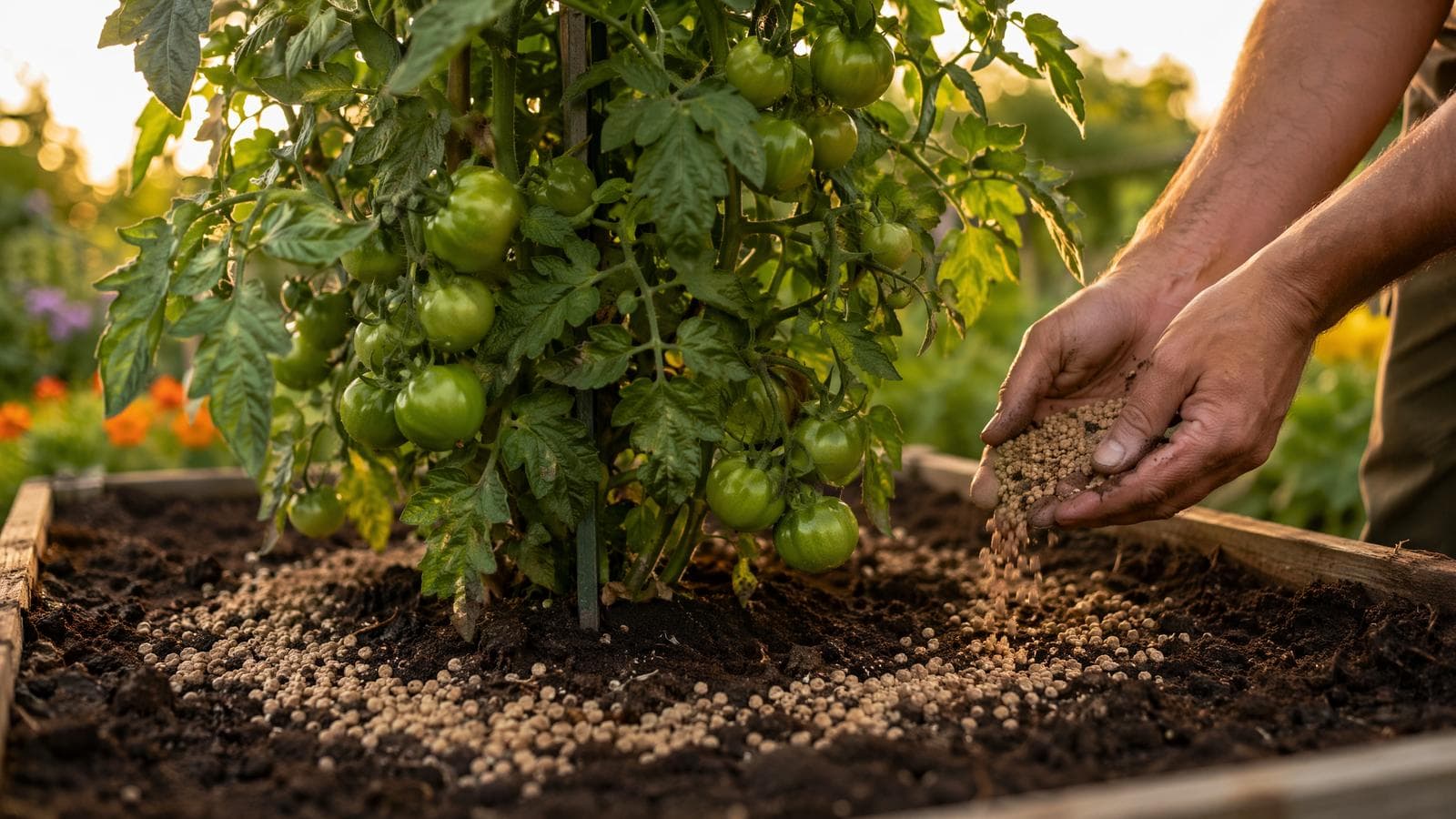
Take a look at your vegetable garden right now. If your tomatoes are setting fruit, your peppers are flowering, and your squash vines are sprawling, your plants are working incredibly hard.
And they are probably starving.
By mid-July, the rich compost and organic fertilizers you worked into the soil back in May have largely been depleted. Heavy-feeding summer vegetables use up an enormous amount of nutrients to produce all that fruit. If you don't replenish the soil now, plant growth will stall, yields will drop, and your plants will become highly susceptible to disease and pests.
As a master gardener, a mid-summer feeding is one of my non-negotiable tasks. Here is how to give your garden a second wind.
The Difference Between Granular and Liquid Fertilizers
When doing a mid-summer feeding, you have two main options, and they serve very different purposes.
Granular Organic Fertilizers:
These are dry, powdery, or pelletized fertilizers that you scratch into the surface of the soil. They are slow-release. Soil microbes have to break them down before the plant roots can absorb the nutrients.
* Best for: Long-term, steady feeding for the rest of the season.
* Application: Apply once in mid-July.
Liquid Fertilizers:
These are water-soluble fertilizers (like fish emulsion or kelp extract) that you mix into your watering can. They are fast-acting. The nutrients are immediately available to the plant roots, and can even be absorbed directly through the leaves (foliar feeding).
* Best for: A quick rescue for pale, yellowing, or stalled plants.
* Application: Apply every 2 to 3 weeks.
How to Side-Dress Your Vegetables
The best way to apply granular fertilizer in mid-summer is a technique called "side-dressing."
1. Choose the right fertilizer: Look for an organic, balanced fertilizer designed for vegetables, like Check Price on Amazon. It contains extra calcium, which helps prevent blossom end rot in tomatoes and peppers.
2. Locate the drip line: Do not pile fertilizer right against the stem of the plant! The feeder roots that absorb nutrients are located out near the "drip line"—the imaginary circle on the ground directly below the outermost tips of the plant's leaves.
3. Apply the fertilizer: Sprinkle the recommended amount of granular fertilizer in a shallow ring around the drip line of the plant.
4. Scratch it in: Use a hand cultivator to gently scratch the fertilizer into the top inch of soil. Be careful not to dig too deep, or you will damage the shallow roots.
5. Water deeply: Always water thoroughly immediately after fertilizing. This jump-starts the microbial breakdown process and carries the nutrients down to the root zone.
What Needs Feeding Right Now?
Not all plants need a mid-summer boost. Here is a quick guide to who is hungry:
Heavy Feeders (Feed Them Now!):
* Tomatoes
* Peppers
* Eggplant
* Cucumbers
* Melons
* Squash & Zucchini
* Corn
Light Feeders (Leave Them Alone):
* Root vegetables (carrots, beets, potatoes) - Too much nitrogen will give you massive green tops but tiny roots!
* Legumes (beans and peas) - These plants actually pull nitrogen out of the air and fix it into the soil themselves.
If you are struggling to keep track of what to feed and when, our AI Garden Chat can help you build a custom maintenance schedule based on what you have planted!
***
*As an Amazon Associate I earn from qualifying purchases.*
***
Frequently Asked Questions
Why are the bottom leaves of my tomato plants turning yellow?
While this can sometimes be a sign of a fungal disease like early blight, uniform yellowing of the lower leaves is often a classic sign of nitrogen deficiency. The plant is pulling nitrogen out of its oldest leaves to support the new growth at the top. A quick dose of liquid fish emulsion will green them right back up.
Can I use synthetic chemical fertilizers instead of organic?
You can, but I don't recommend it. Synthetic fertilizers (the blue crystals you mix with water) are like a sugar rush for plants. They cause rapid, weak growth that attracts aphids, and they do nothing to improve the long-term health of your soil. Organic fertilizers feed the soil web, which in turn feeds your plants sustainably.
Is it possible to over-fertilize?
Yes! Too much nitrogen will cause your tomato and pepper plants to grow massive, lush green leaves, but they will produce very few flowers or fruit. Always follow the application rates on the fertilizer package.
Ready to Design?
Upload a photo of your space and get beautiful, personalized design ideas in seconds.
Keep reading
Seasonal planting reminders and expert guides — free.