Blog
How to Grow Sweet Potatoes in Your Summer Garden: A Complete Guide
Late May is the perfect time to plant sweet potato slips! Learn how to grow sweet potatoes from slip to harvest, including the best varieties, soil prep, spacing, and care tips for a bumper crop.
2026-05-23
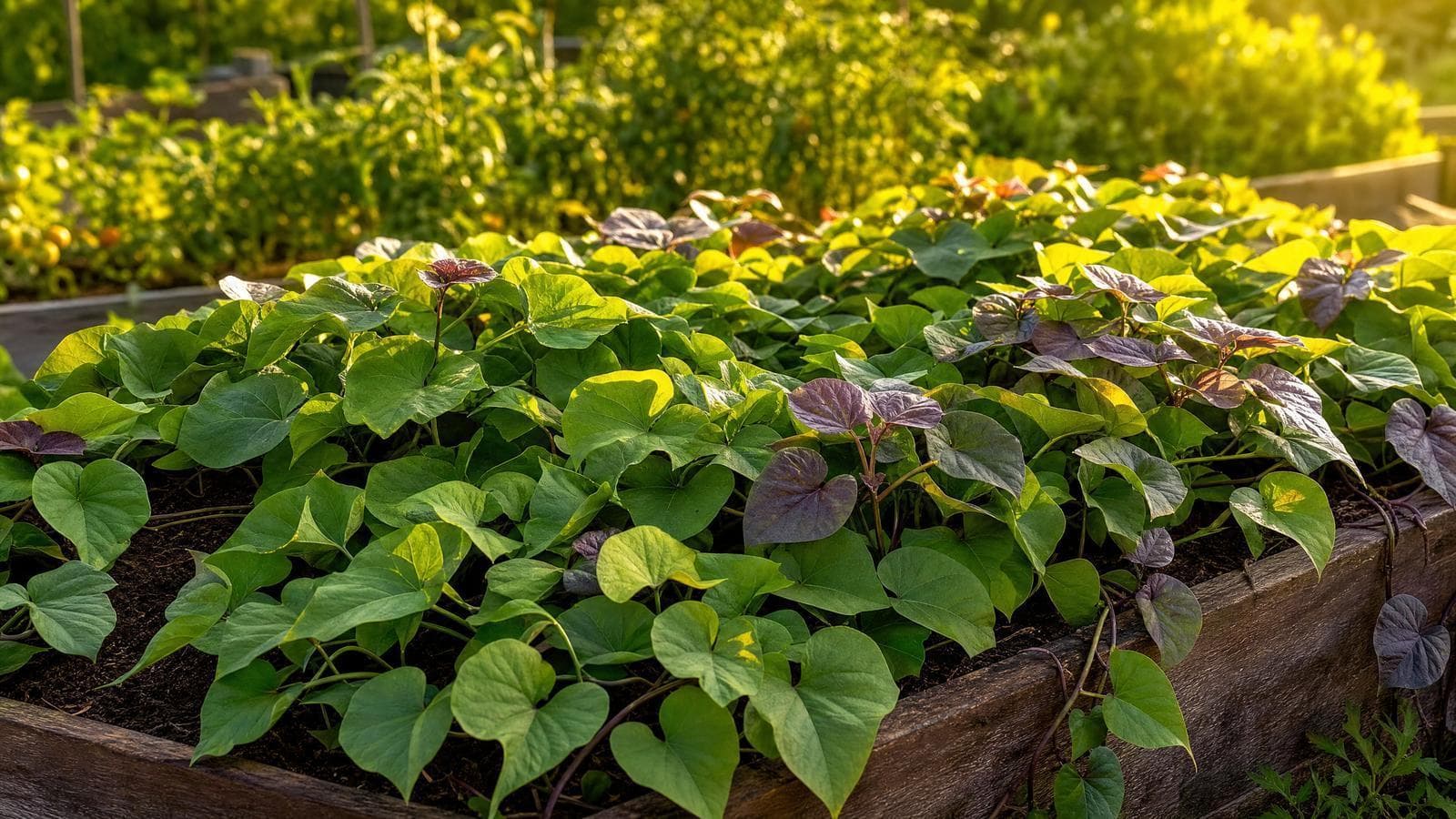
Hello, gardening friends! If you've been looking for a vegetable that practically takes care of itself once it gets going, thrives in the summer heat, and rewards you with one of the most nutritious and delicious harvests imaginable, then sweet potatoes are calling your name. And guess what? Right now—late May into early June—is the absolute prime window for planting sweet potato slips in most of the country.
I'll be honest with you: I was intimidated by sweet potatoes for years. They seemed like something only farmers in the Deep South could grow. But once I tried them, I was completely hooked. They are surprisingly easy, incredibly productive, and the vines are so beautiful that they double as a living ground cover all summer long. Let me walk you through everything you need to know.
What Are Sweet Potato Slips?
Unlike regular potatoes, sweet potatoes are not grown from seed or from pieces of the tuber itself. They are grown from slips—small rooted sprouts that grow off of a mature sweet potato. You can purchase slips from a garden center or online nursery, or you can grow your own from a store-bought sweet potato (more on that in a moment).
Slips look like small leafy cuttings with a few roots at the base. They are delicate when they first arrive, but they establish quickly once they hit warm soil. This is why timing is so important: you need to wait until the soil temperature is consistently at least 60°F (ideally 65–70°F) and all danger of frost has passed. Late May is perfect for most of zones 5 through 9.
Choosing the Best Sweet Potato Varieties
There are dozens of sweet potato varieties, and the choice can be overwhelming. Here are my favorites for home gardeners:
| Variety | Flesh Color | Days to Harvest | Best For |
|---|---|---|---|
| Beauregard | Deep orange | 90 days | Beginners, high yield |
| Jewel | Orange | 100 days | Classic flavor, disease resistant |
| Georgia Jet | Orange-red | 90 days | Northern gardeners, short seasons |
| Covington | Orange | 103 days | Exceptional sweetness |
| Murasaki | White flesh, purple skin | 100 days | Unique flavor, ornamental |
| Bonita | Cream/white | 95 days | Dry texture, great for baking |
For most home gardeners, Beauregard or Georgia Jet are the best starting points. They are reliable, high-yielding, and widely available as slips.
Preparing the Soil for Sweet Potatoes
Sweet potatoes are not fussy, but they do have one firm requirement: loose, well-draining soil. They are growing large tubers underground, and if the soil is compacted or heavy with clay, those tubers will be stunted, misshapen, or prone to rot.
Here's how to prepare the perfect sweet potato bed:
1. Loosen the soil deeply. Use a garden fork or broadfork to loosen the soil to a depth of at least 12 inches. This is the single most important step. A good Check Price on Amazon is one of the best investments you can make for root vegetable growing.
2. Amend with compost. Work in a generous 2–3 inch layer of finished compost. This improves drainage in clay soils and moisture retention in sandy soils.
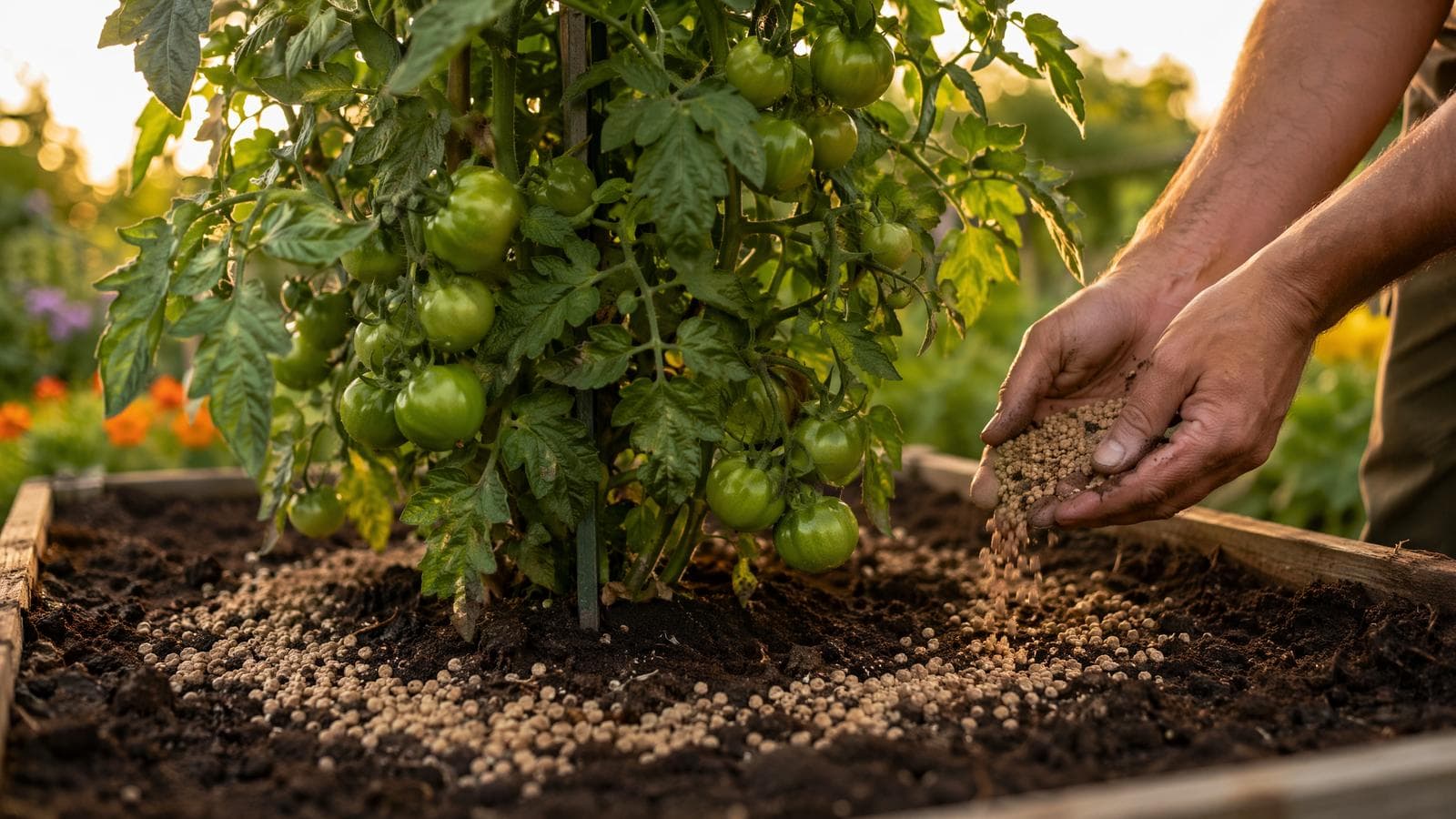
3. Go easy on the nitrogen. Sweet potatoes are not heavy feeders. Too much nitrogen (especially from fresh manure or high-nitrogen fertilizers) will give you lush, beautiful vines with very few tubers. Use a balanced, low-nitrogen fertilizer at planting time. A good Check Price on Amazon will give your slips a gentle start without pushing all that energy into the leaves.
4. Consider raised rows. Many gardeners plant sweet potatoes in raised rows or mounded hills about 8–10 inches high. This improves drainage and warms the soil faster, which the roots love.
How to Plant Sweet Potato Slips
Once your soil is prepared and the weather is reliably warm, it's time to plant!
Spacing: Plant slips 12–18 inches apart in rows that are 3–4 feet apart. Sweet potato vines spread aggressively—they can easily cover 4–6 feet in every direction—so give them room to roam.
Planting Depth: Bury the slip so that the lower 2–3 nodes (the little bumps on the stem where leaves emerge) are underground. These nodes will develop into the root system and eventually produce tubers. The leaves should be above the soil surface.
Watering In: Water deeply right after planting. For the first week or two, keep the soil consistently moist to help the slips establish. They may look a bit wilted and sad for the first few days—this is completely normal. They are just getting their roots established. Don't panic!
Summer Care: How to Tend Your Sweet Potatoes
Once established, sweet potatoes are genuinely low-maintenance. Here's what to keep up with:
Watering
Sweet potatoes are surprisingly drought-tolerant once established, but they do best with about 1 inch of water per week during the growing season. As you approach harvest time (the last 3–4 weeks), you can reduce watering. This actually helps concentrate the sugars in the tubers and improves flavor.
Weeding
The vines will eventually shade out most weeds, but for the first 4–6 weeks, keep the bed weeded. After that, the sprawling vines do the work for you.
Vine Management
Those vines will try to root wherever they touch the soil, which can actually divert energy away from your main tubers. Some gardeners periodically lift the vines and redirect them to prevent this. It's not strictly necessary, but it can improve tuber size.
Fertilizing
If your plants look pale or are growing slowly, a light side-dressing of a balanced fertilizer in mid-summer can help. Avoid heavy nitrogen applications.
Knowing When to Harvest
This is where patience pays off! Sweet potatoes need a long, warm growing season—typically 90 to 120 days from planting, depending on the variety. The best signal that they are ready is when the vines start to yellow and die back in the fall. You can also do a test dig: carefully dig up one plant and check the size of the tubers.
Always harvest before the first frost. A hard frost will damage the tubers in the ground and significantly reduce their storage life.
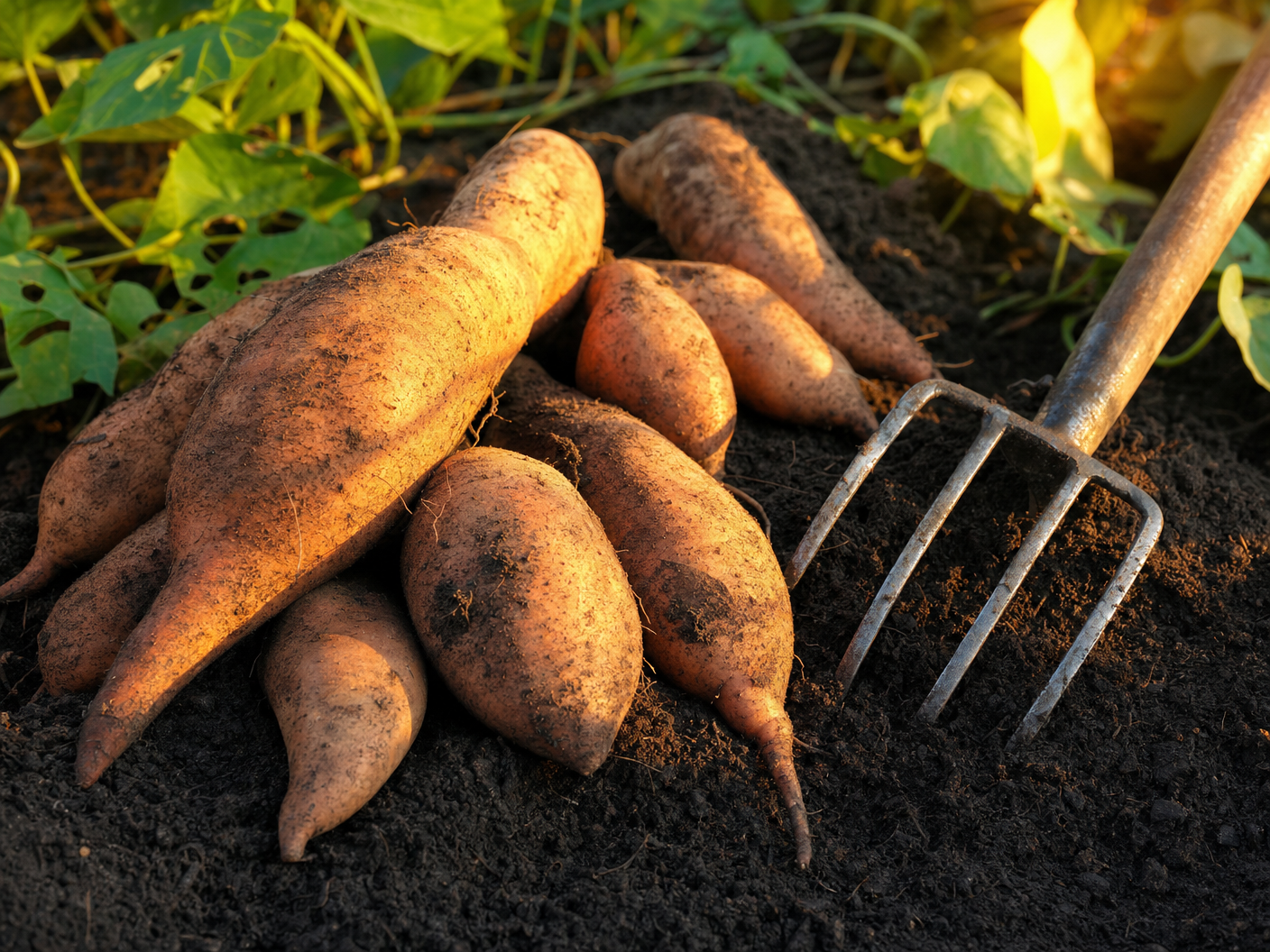
How to Harvest: Use a garden fork to gently loosen the soil around each plant, working from the outside in. Sweet potatoes can be surprisingly large and spread out, so dig carefully to avoid piercing them. Handle them gently—fresh sweet potatoes bruise easily.
Curing and Storing Your Harvest
Here's a step that most new sweet potato growers skip, and it makes a huge difference: curing. Fresh-dug sweet potatoes actually taste starchy and bland. Curing converts those starches into sugars, giving them that characteristic sweetness.
To cure sweet potatoes, place them in a warm (80–85°F), humid location for 7–10 days. A sunny room or a spot near a furnace works well. After curing, move them to a cool (55–60°F), dark location where they can keep for 6 months or more.
Plan Your Garden Layout with GrowGardens.ai
Sweet potatoes need space, and planning their placement in your garden is key. Use our Garden Designer to upload a photo of your garden and get personalized layout suggestions. Not sure what else to plant alongside them? Check out our Plant This Month guide for perfectly timed companion planting ideas, or visit our Community Chat to ask a question. You can also find our favorite sweet potato growing supplies in our Shop.
---
Frequently Asked Questions (FAQ)
Q: Can I grow sweet potatoes in containers?
A: Yes, but you'll need a very large container—at least 15–20 gallons per plant. Use a loose, well-draining potting mix and a container that is wide rather than tall to give the tubers room to spread. Expect smaller yields than in-ground plants.
Q: Can I grow my own sweet potato slips from a grocery store sweet potato?
A: Absolutely! Simply place a sweet potato halfway submerged in a jar of water (use toothpicks to hold it up) in a warm, sunny spot. Within a few weeks, sprouts (slips) will emerge. Once the slips are 4–6 inches long with a few leaves, snap them off and place them in water until they develop roots, then plant them out.
Q: Do sweet potatoes need a lot of sun?
A: Yes, they are full-sun vegetables. They need at least 6–8 hours of direct sunlight per day to produce a good harvest. In shadier spots, the vines will still grow beautifully, but tuber production will be disappointing.
Q: Are sweet potato leaves edible?
A: Yes! Sweet potato leaves are nutritious and delicious. You can harvest young leaves and stems throughout the summer and use them just like spinach—sautéed, in soups, or in salads. This is a wonderful bonus harvest that most gardeners don't take advantage of.
Q: What pests should I watch out for?
A: Sweet potato weevils are the most serious pest in warmer climates. Deer and voles can also be a problem. In most home gardens, however, sweet potatoes are relatively pest-free. The biggest threats are usually soil-borne diseases, which is why good drainage and crop rotation are so important.
---
*Disclosure: As an Amazon Associate I earn from qualifying purchases.*
Ready to Design?
Upload a photo of your space and get beautiful, personalized design ideas in seconds.
Keep reading
Seasonal planting reminders and expert guides — free.