Blog
How to Grow Cucamelons: The Tiny Vine That Produces All Summer Long
Discover the joy of growing cucamelons — the adorable grape-sized fruits that look like miniature watermelons and taste like cucumber with a citrus twist. A complete growing guide from seed to harvest.
2026-05-24
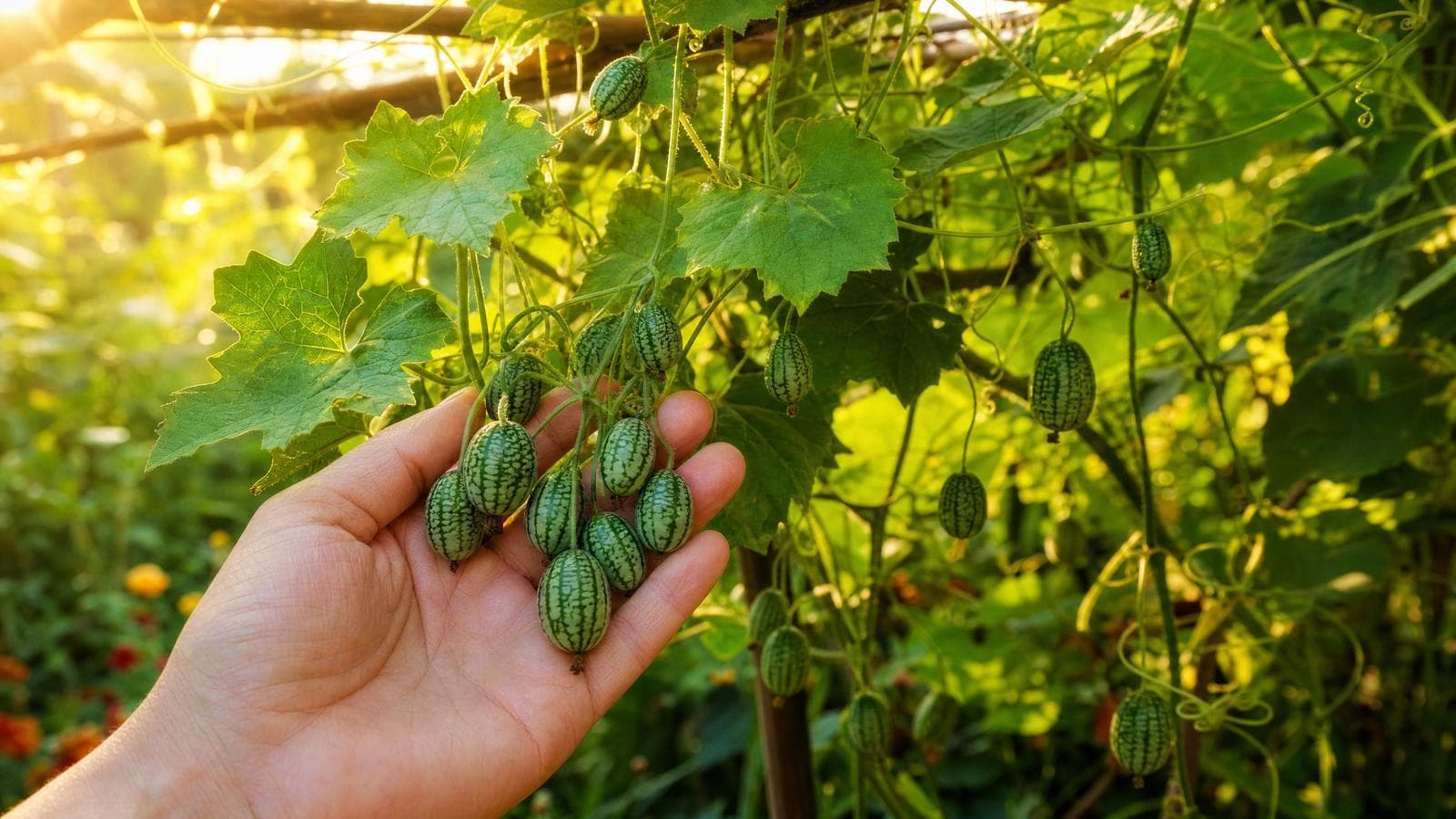
If you've never grown cucamelons before, prepare to fall completely in love. I first planted them on a whim a few summers ago after spotting a packet at my local nursery, and I have grown them every single year since. These tiny, grape-sized fruits look exactly like miniature watermelons — complete with green and white stripes — but they taste like a refreshing cucumber with a surprising hint of lime. Kids go absolutely wild for them, and dinner party guests always ask, "What *is* that?!"
Beyond being a conversation piece, cucamelons (*Melothria scabra*) are genuinely one of the most productive, low-maintenance vines you can grow. Once they get going in the summer heat, they produce prolifically right up until the first frost. If you're looking for something new and exciting to add to your garden this season, now is the perfect time to get them started.
What Exactly Is a Cucamelon?
The cucamelon goes by many names: mouse melon, Mexican sour gherkin, or its Spanish name *sandíita* (little watermelon). It's a native plant from Mexico and Central America, where it has been cultivated for centuries. Despite its watermelon appearance, it is actually more closely related to cucumbers, which explains that crisp, refreshing flavor.
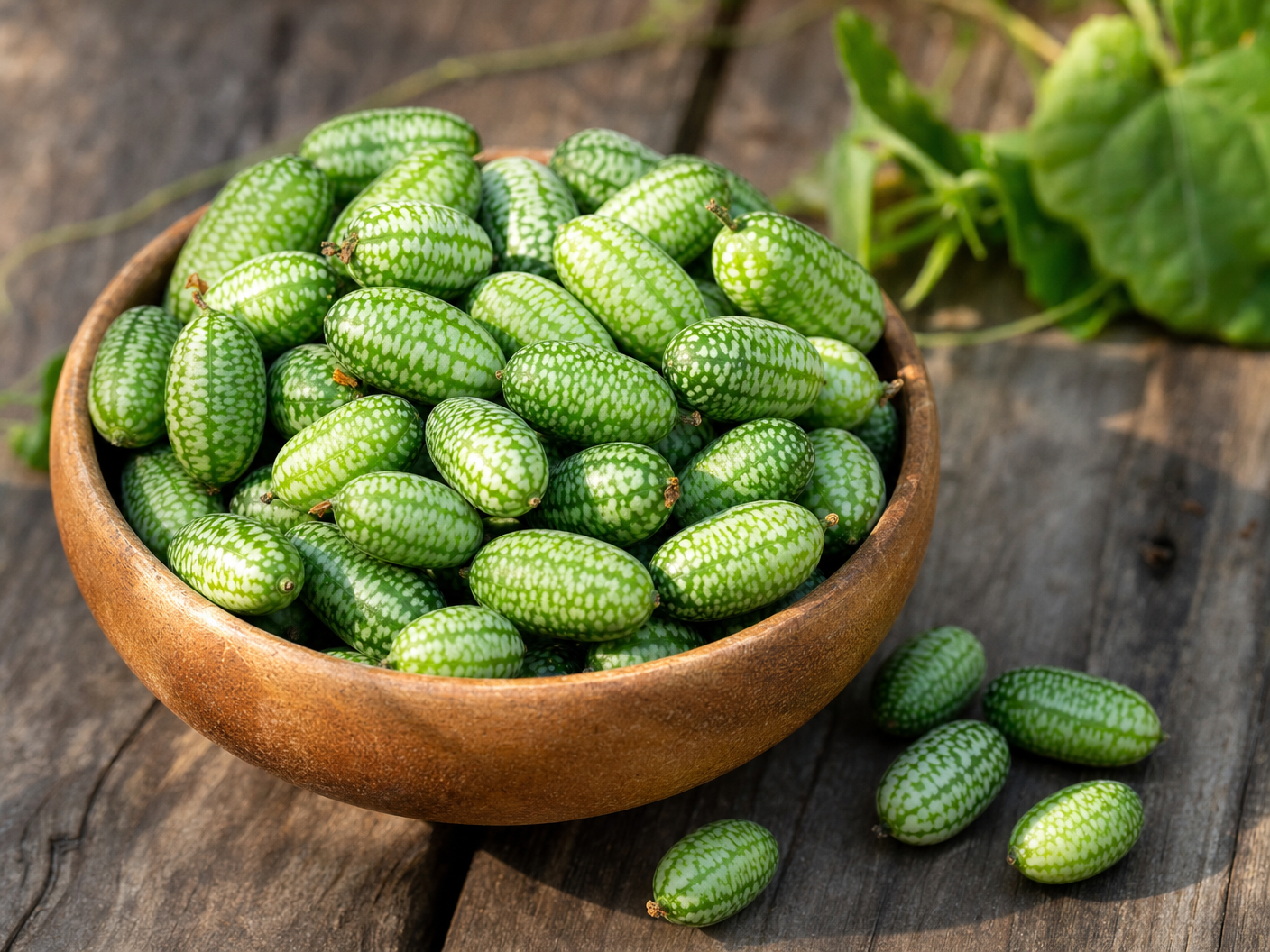
The vines are delicate and beautiful, producing tiny yellow flowers that attract pollinators before setting fruit. Each fruit is typically about the size of a large grape — roughly an inch long — and is eaten whole, skin and all. They are wonderful eaten fresh off the vine, tossed in salads, pickled, or used as a garnish in cocktails (they make an incredible addition to a gin and tonic!).
Starting Cucamelons from Seed
Cucamelons have a longer growing season than most vegetables, which is why late May is actually the ideal time to get them started if you haven't already. They need a long, warm season to really hit their stride.
Starting Indoors: If you're in a cooler climate or want a head start, you can start cucamelon seeds indoors 4 to 6 weeks before your last frost date. Sow seeds about half an inch deep in small pots filled with a good quality seed-starting mix. They germinate best at soil temperatures between 70°F and 85°F, so a heat mat can really speed things up. I love using a Check Price on Amazon to give my seeds that warm boost they need.
Direct Sowing Outdoors: In warmer climates (USDA Zones 7 and above), you can direct sow cucamelon seeds outdoors once the soil has warmed to at least 65°F. Plant seeds about half an inch deep and 12 inches apart.
Important Tip: Cucamelon seeds can be notoriously slow to germinate — sometimes taking 2 to 3 weeks. Don't give up on them! Keep the soil consistently moist and warm, and they will eventually sprout.
Setting Up the Perfect Trellis
Cucamelon vines are vigorous climbers that can reach 8 to 10 feet tall. They use delicate little tendrils to grab onto any support they can find, which makes them absolutely charming to watch. However, they do need a sturdy trellis or support structure to thrive.
A simple cattle panel, a bamboo teepee, or a wire mesh fence all work beautifully. I personally love using a vertical garden trellis net because it allows the vines to spread out evenly and maximizes air circulation, which helps prevent fungal issues. A good quality Check Price on Amazon is one of the best investments you can make for your cucamelon patch.
Once you've installed your trellis, plant your cucamelon seedlings or sow seeds at the base. The vines will find the trellis on their own within a day or two and begin climbing enthusiastically.
Soil, Watering, and Fertilizing
Cucamelons are wonderfully adaptable and far less fussy than cucumbers or melons. They prefer well-draining soil with a pH between 6.0 and 7.0. If you're growing in raised beds (which I highly recommend for these vines), a standard vegetable garden mix works perfectly. You can check out our garden designer tool to help plan the best placement for your cucamelon trellis in your overall garden layout.
Watering: Cucamelons are surprisingly drought-tolerant once established — far more so than regular cucumbers. That said, consistent moisture during the fruiting period leads to the best yields. Aim for about an inch of water per week, either from rainfall or irrigation. A simple drip irrigation setup at the base of the plants is ideal.
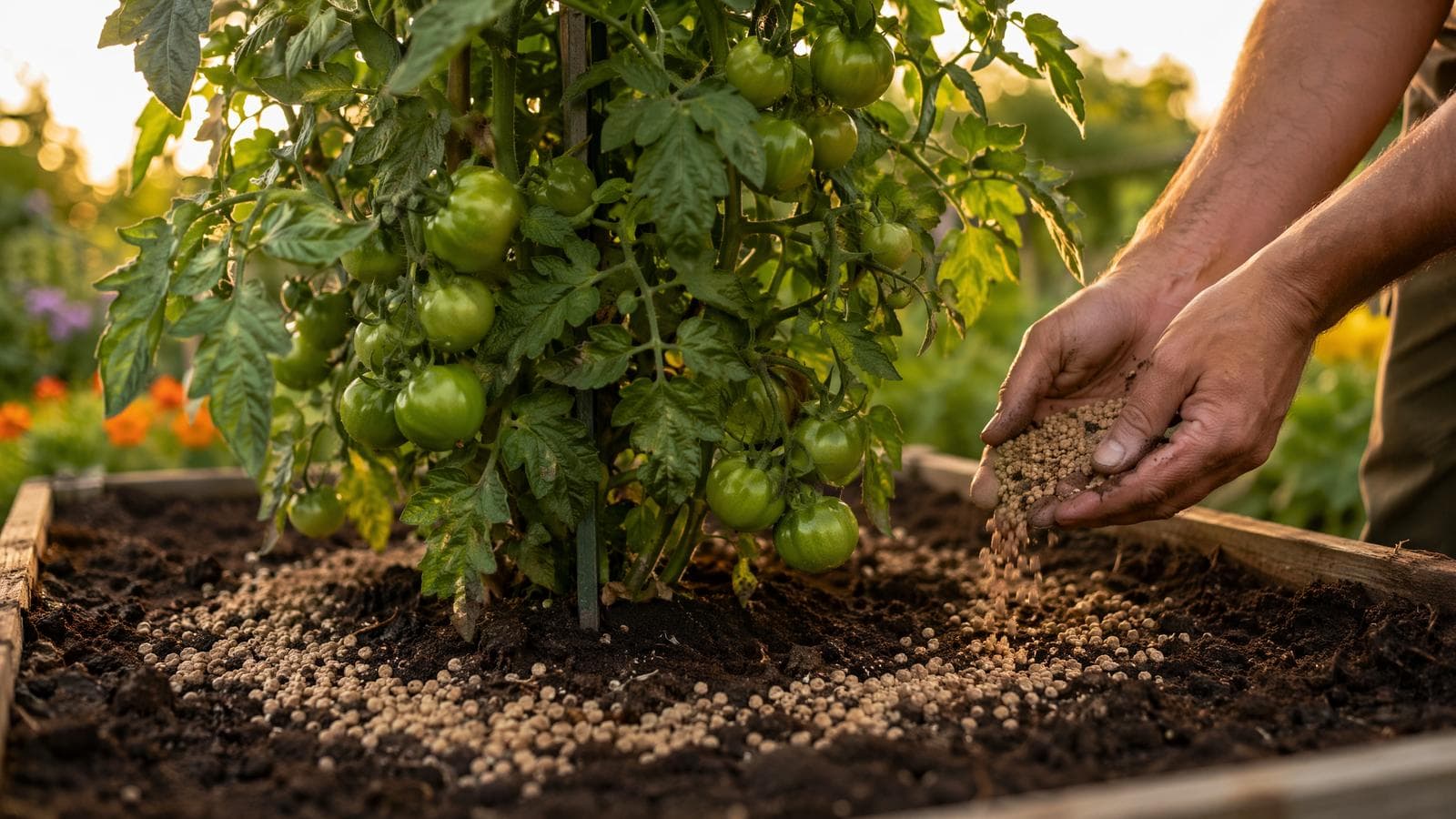
Fertilizing: These vines are not heavy feeders. A light application of a balanced vegetable fertilizer at planting time, followed by a side-dressing of compost mid-season, is usually all they need. Avoid over-fertilizing with nitrogen, as this will encourage lush leafy growth at the expense of fruit production.
Harvesting Cucamelons
This is the most fun part! Cucamelons are ready to harvest when they are about the size of a large grape — roughly 1 inch long. At this stage, they are firm, crisp, and at their flavor peak. If you let them get too large, they become seedy and slightly bitter, so check your vines every day or two once they start producing.
Harvesting is as simple as giving the tiny fruit a gentle twist. They snap off the vine cleanly. One of the great joys of cucamelons is that the more you harvest, the more the plant produces. A well-established vine in full summer production can yield dozens of fruits per week.
Pests and Disease
This is where cucamelons truly shine compared to their cucumber cousins. They are remarkably resistant to most of the pests and diseases that plague regular cucumbers. Cucumber beetles, which can devastate a cucumber crop, largely ignore cucamelons. Powdery mildew, another common cucumber problem, is rarely an issue.
The main pest to watch for is aphids, particularly early in the season when the plants are young. A strong spray of water from the hose is usually enough to knock them off. If you need more help with pest identification and organic solutions, our garden chat assistant can walk you through the best treatments for your specific situation.
Growing Cucamelons in Containers
Great news for small-space gardeners: cucamelons grow beautifully in containers! Choose a pot that is at least 12 inches deep and wide, and install a small trellis or bamboo stakes for the vine to climb. Place the container in your sunniest spot — at least 6 to 8 hours of direct sun per day — and water more frequently than you would for in-ground plants, as containers dry out faster.
If you're looking for the best container options for your edible garden, head over to our shop for curated recommendations. You can also browse our tools and plant guides to see what else is perfect to plant alongside your cucamelons this month.
Saving Seeds for Next Year
One of the best things about cucamelons is that they form a small tuber underground, similar to a dahlia tuber. In warmer climates (Zone 9 and above), you can leave this tuber in the ground over winter and it will re-sprout in spring, giving you a head start on the season. In cooler climates, you can carefully dig up the tuber after the first frost, store it in a cool, dry place over winter, and replant it in spring.
Alternatively, to save seeds, simply allow a few fruits to stay on the vine until they are fully ripe and slightly soft. Cut them open, scoop out the seeds, rinse them, and dry them completely on a paper towel before storing in a cool, dry envelope for next year.
I genuinely believe cucamelons are one of the most underrated vegetables in the home garden. They are productive, beautiful, nearly pest-free, and endlessly fun to grow and share. If you have even a small sunny fence or trellis, give them a try this summer — I promise you won't regret it!
Happy growing!
---
Frequently Asked Questions
Q: Do cucamelons taste like watermelon?
A: Despite their watermelon appearance, cucamelons taste much more like a cucumber with a pleasant citrus or lime-like tartness. They are crisp, refreshing, and mildly flavored — nothing like the sweet taste of watermelon.
Q: How long does it take for cucamelons to produce fruit?
A: Cucamelons typically begin producing fruit about 65 to 70 days after transplanting, or 75 to 85 days from direct sowing. Once they start, they produce continuously until frost.
Q: Can I grow cucamelons in a hanging basket?
A: While technically possible, hanging baskets are generally too small and dry out too quickly for cucamelons. A large container (at least 12 inches deep) with a vertical trellis is a much better option for container growing.
Q: Are cucamelons perennial?
A: In frost-free climates (Zone 10+), cucamelons can behave as perennials. In most of the US, they are grown as annuals, though you can overwinter the tuber indoors and replant it each spring for a head start.
Q: Where can I buy cucamelon seeds?
A: Cucamelon seeds are becoming more widely available. You can find them at specialty seed companies or conveniently online. Check Price on Amazon for a variety of seed options.
---
*Disclosure: As an Amazon Associate I earn from qualifying purchases.*
Ready to Design?
Upload a photo of your space and get beautiful, personalized design ideas in seconds.
Keep reading
Seasonal planting reminders and expert guides — free.