Blog
Garlic Scapes: How to Harvest Them, Cook Them, and Know When Your Garlic Is Ready to Dig
Late May and early June is prime time for garlic scapes! Learn how to identify, harvest, and cook garlic scapes, and get the master gardener's guide to knowing exactly when your hardneck garlic bulbs are ready to pull.
2026-05-28
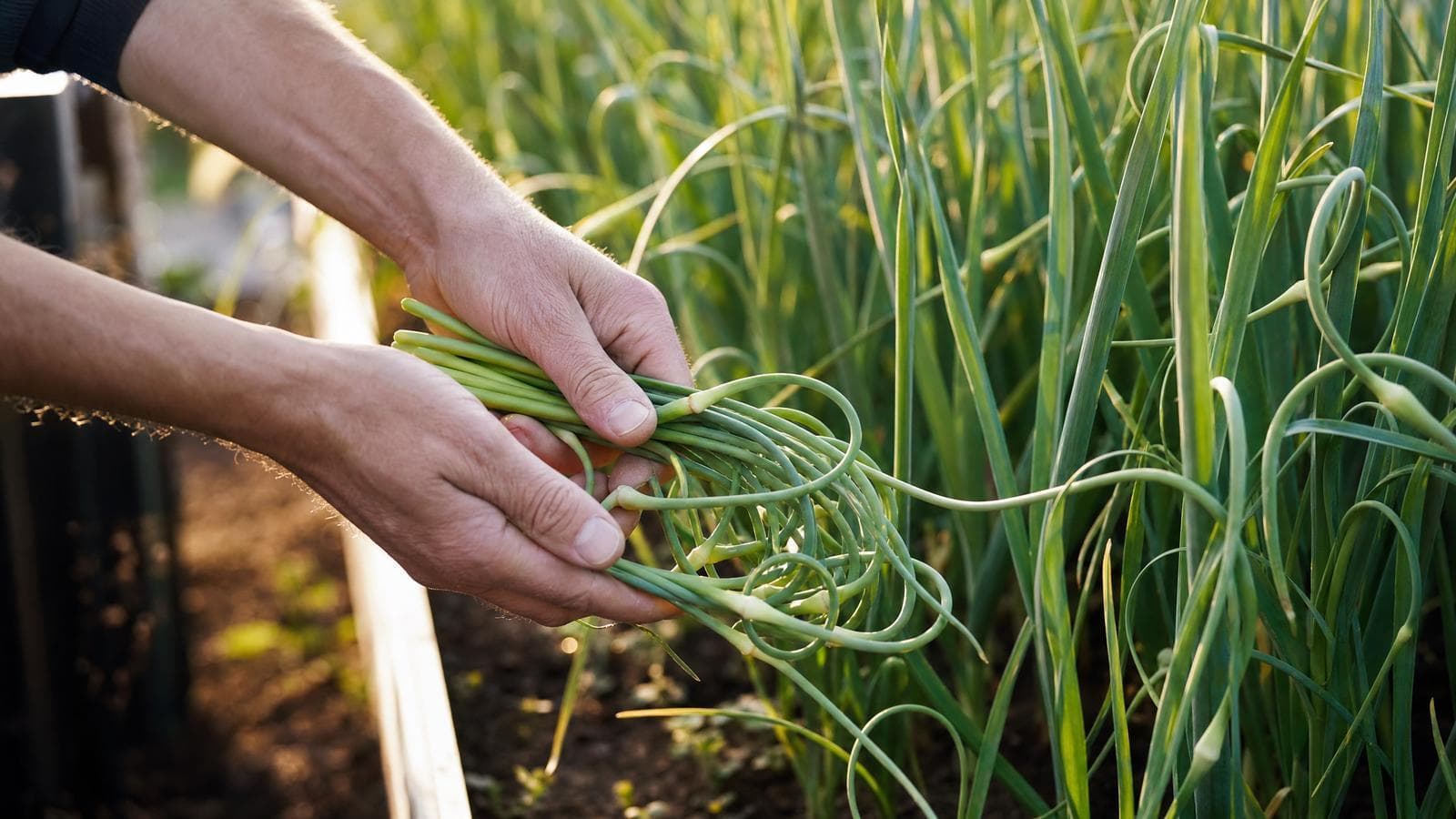
If you planted hardneck garlic last fall, right now — in late May and early June — is one of the most exciting moments in the entire gardening year. Your garlic plants are sending up their scapes, and that means two wonderful things: a delicious bonus harvest, and a countdown clock to the main event.
I absolutely love this time of year in the garden. There is something deeply satisfying about a crop that you planted in the cold of autumn, watched sleep under the snow all winter, and are now finally getting ready to bring in. If you have never grown hardneck garlic before, or if you have been growing it but weren't sure what to do with those curly green spirals shooting up from the tops of your plants, this guide is for you.
What Are Garlic Scapes?
Garlic scapes are the flowering stalks that hardneck garlic varieties send up in late spring and early summer. They emerge from the center of the plant, initially growing straight up before curling into a distinctive loop or spiral. At the tip, you will notice a pointed, papery sheath — this is the flower bud, called the spathe, which would eventually open into a flower and then form small bulbils (tiny aerial cloves) if left on the plant.
It is important to note that only hardneck garlic produces scapes. Softneck garlic, the kind you most commonly find in grocery stores, does not. If you planted a hardneck variety like Rocambole, Purple Stripe, or Porcelain, you are in for this annual treat.
Why You Should Always Harvest Garlic Scapes
This is the question I get most often from newer garlic growers: "Do I have to cut them off?" The short answer is yes, and here is why.
When a garlic plant puts energy into forming a flower and producing bulbils, it diverts that energy away from the underground bulb. The whole point of growing garlic is to get the largest, most flavorful bulb possible. By snapping off the scape before it fully straightens out, you redirect all of that plant's energy back down into the bulb. Studies from garlic growers consistently show that removing scapes can increase bulb size by 25% or more. That is a significant difference!
Beyond the agronomic benefit, scapes are genuinely delicious. They taste like a milder, more delicate version of garlic — perfect for cooking. Removing them is truly a win-win.
When to Harvest Garlic Scapes
Timing your scape harvest is important. You want to cut them when they have made one full curl or loop, but before they have straightened back out and become tough and fibrous.
Here is a simple visual guide:
- Too early: The scape is just emerging and barely curled. Wait a few more days.
- Perfect timing: The scape has made one complete loop or curl. The tip is still pointing somewhat downward. This is the sweet spot — the scape is tender and flavorful.
- Too late: The scape has straightened out and is pointing upward. The texture becomes tougher and woody, though still edible if cooked well.
In most climates, scapes are ready to harvest somewhere between late May and mid-June. Check your plants every few days once you see them starting to emerge.
How to Harvest Garlic Scapes
Harvesting is simple. You can either snap them off by hand or use a clean pair of garden scissors or pruners. Cut or snap the scape as close to the base as possible, right where it emerges from the top of the plant's leaves. You want to remove the entire scape, including the bulging spathe at the tip.
A good pair of garden scissors makes this job easy and clean:
After harvesting, your garlic scapes will keep in the refrigerator for up to three weeks in a sealed bag or container. They also freeze beautifully — just chop them up and freeze in a single layer before transferring to a bag.
How to Cook Garlic Scapes
Now for the fun part! Garlic scapes are incredibly versatile in the kitchen. Here are my favorite ways to use them:
Garlic Scape Pesto: This is the classic. Blend garlic scapes with olive oil, Parmesan, pine nuts or walnuts, lemon juice, and salt. It is incredible on pasta, spread on crusty bread, or stirred into scrambled eggs. Use it anywhere you would use basil pesto.
Grilled Garlic Scapes: Toss whole scapes with olive oil and a pinch of salt, then grill over medium-high heat for 3-4 minutes per side until lightly charred. They become tender, slightly sweet, and smoky. Serve as a side dish or appetizer.
Stir-Fries and Sautés: Chop scapes into 1-inch pieces and add them to any stir-fry in place of garlic cloves. They add a wonderful mild garlic flavor without the sharpness of raw garlic.
Pickled Garlic Scapes: Pack whole scapes into mason jars with a simple brine of vinegar, water, salt, and a pinch of red pepper flakes. They make a fantastic condiment and last for months in the refrigerator.
Knowing When to Harvest Your Garlic Bulbs
After you have harvested the scapes, your attention turns to the main event: the bulbs. Harvesting garlic at the right time is crucial. Pull it too early, and the cloves will be small and underdeveloped. Pull it too late, and the papery wrapper around the bulb will have broken down, making the bulbs difficult to store and cure.
The traditional rule of thumb is to count the leaves. Each leaf on a garlic plant corresponds to a wrapper layer around the bulb. When about half the leaves (usually 5 or 6 out of 10-12) have turned brown and died back, the garlic is ready to harvest. You want to have enough green leaves remaining to form a good, protective wrapper around the bulb.
In most regions, this happens approximately 3-4 weeks after you harvest the scapes — so typically late June to mid-July. Keep an eye on your plants as June progresses.
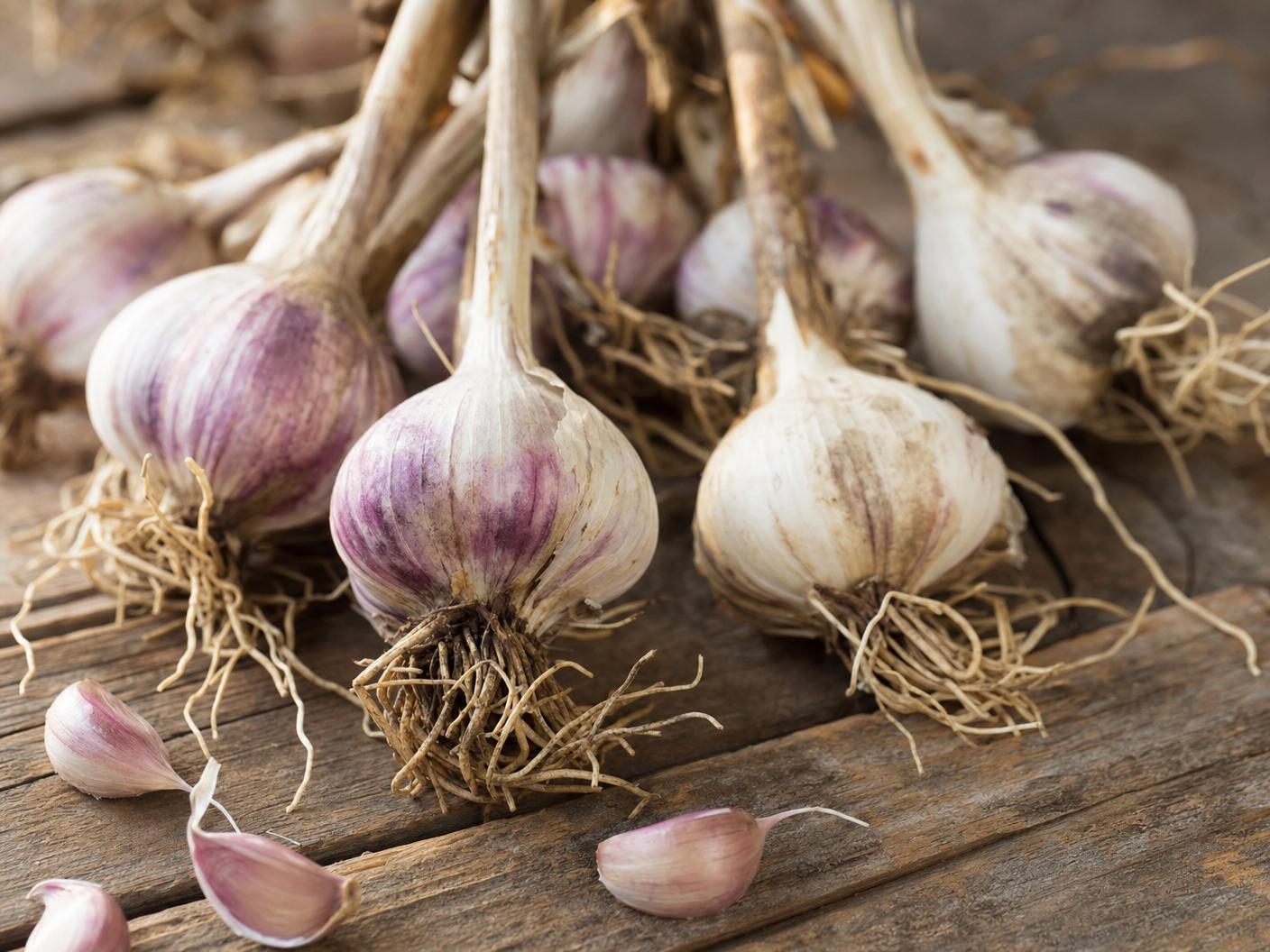
*Freshly harvested hardneck garlic — the purple streaking on the wrappers is a hallmark of beautiful, flavorful hardneck varieties.*
How to Harvest and Cure Garlic Bulbs
When the time comes to harvest, use a garden fork or a flat spade to loosen the soil around the bulbs before pulling them up. Never yank garlic straight out of the ground by the stem — you risk breaking the stem away from the bulb, which damages the wrapper and reduces storage life.
A sturdy garden fork is the ideal tool for this job:
After harvesting, garlic needs to be cured before it can be stored. Lay the bulbs out in a single layer in a warm, dry, well-ventilated area out of direct sunlight — a covered porch, a barn, or a garage with good airflow works perfectly. Leave the stems and roots attached. Cure for 3-4 weeks until the outer wrappers are completely dry and papery, and the stems are fully dried.
Once cured, trim the roots and stems to about an inch, brush off any loose dirt, and store in a cool, dry, dark location. Properly cured hardneck garlic will keep for 4-6 months.
Plan Your Next Garlic Crop Now
One of the best things about growing garlic is that you can save your best-looking bulbs to replant in the fall. Set aside the largest, most perfectly formed bulbs from this year's harvest to use as seed garlic for October planting. This is how home gardeners gradually develop their own locally adapted strains of garlic over many years.
Want help planning your fall garlic bed alongside your other crops? Try the GrowGardens.ai Garden Designer to map out your space, or ask our Garden AI Chat any questions you have about garlic varieties, spacing, or timing. You can also check out our Plant This Month tool to see what else you should be planting or harvesting right now.
Happy harvesting — and enjoy those scapes!
---
Frequently Asked Questions (FAQ)
Can I eat garlic scapes raw?
Yes! Raw garlic scapes have a sharp, pungent garlic flavor. They are great finely minced and added to salad dressings or dips. However, most people find them more pleasant when cooked, which mellows their flavor considerably.
My garlic scapes have already straightened out. Did I miss the window?
Not entirely! Straightened scapes are tougher but still edible, especially when cooked for longer in soups, stews, or roasted dishes. Remove them right away to stop the plant from putting energy into forming bulbils.
How do I know if my garlic is hardneck or softneck?
If it is producing scapes, it is hardneck! Softneck varieties do not produce scapes. Hardneck garlic also tends to have a more complex, robust flavor and fewer, larger cloves compared to softneck.
What if my garlic bulbs are very small when I dig them up?
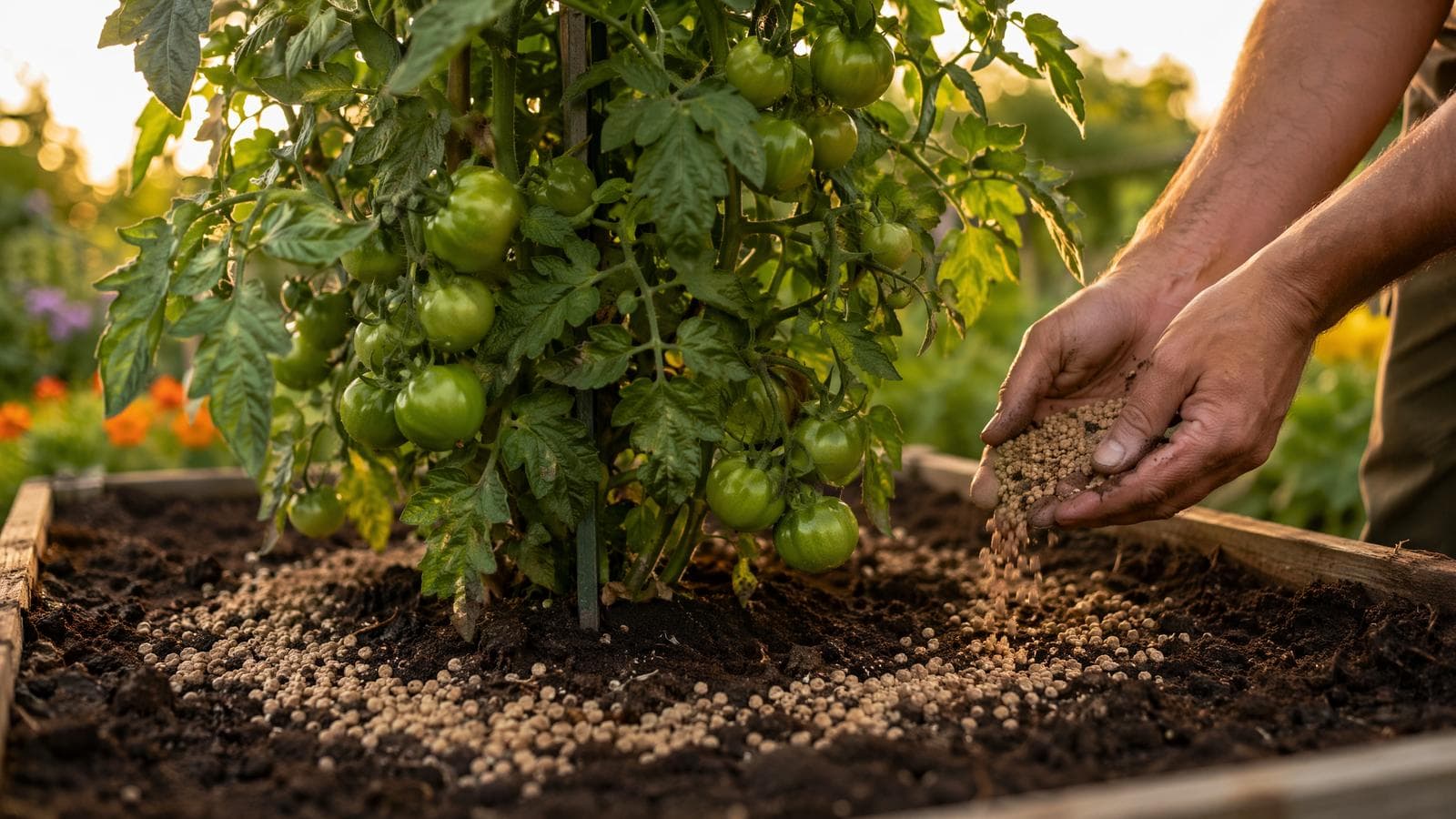
Small bulbs usually indicate one of three things: the scapes were left on too long (diverting energy from the bulb), the plants were stressed by drought or poor nutrition during the spring bulbing period, or they were harvested too early. For next year, focus on consistent watering in April and May, a spring top-dressing of a balanced fertilizer, and prompt scape removal.
---
*Disclosure: As an Amazon Associate I earn from qualifying purchases. The links in this article are affiliate links, meaning I may earn a small commission if you purchase through them, at no extra cost to you. This helps support the site and keep the gardening tips coming!*
Ready to Design?
Upload a photo of your space and get beautiful, personalized design ideas in seconds.
Keep reading
Seasonal planting reminders and expert guides — free.