Blog
How to Grow Butternut Squash: Your Complete Summer Garden Guide
Learn how to grow butternut squash from seed to harvest in your backyard garden. Get expert tips on planting, spacing, watering, pest control, and knowing exactly when to pick.
2026-05-29
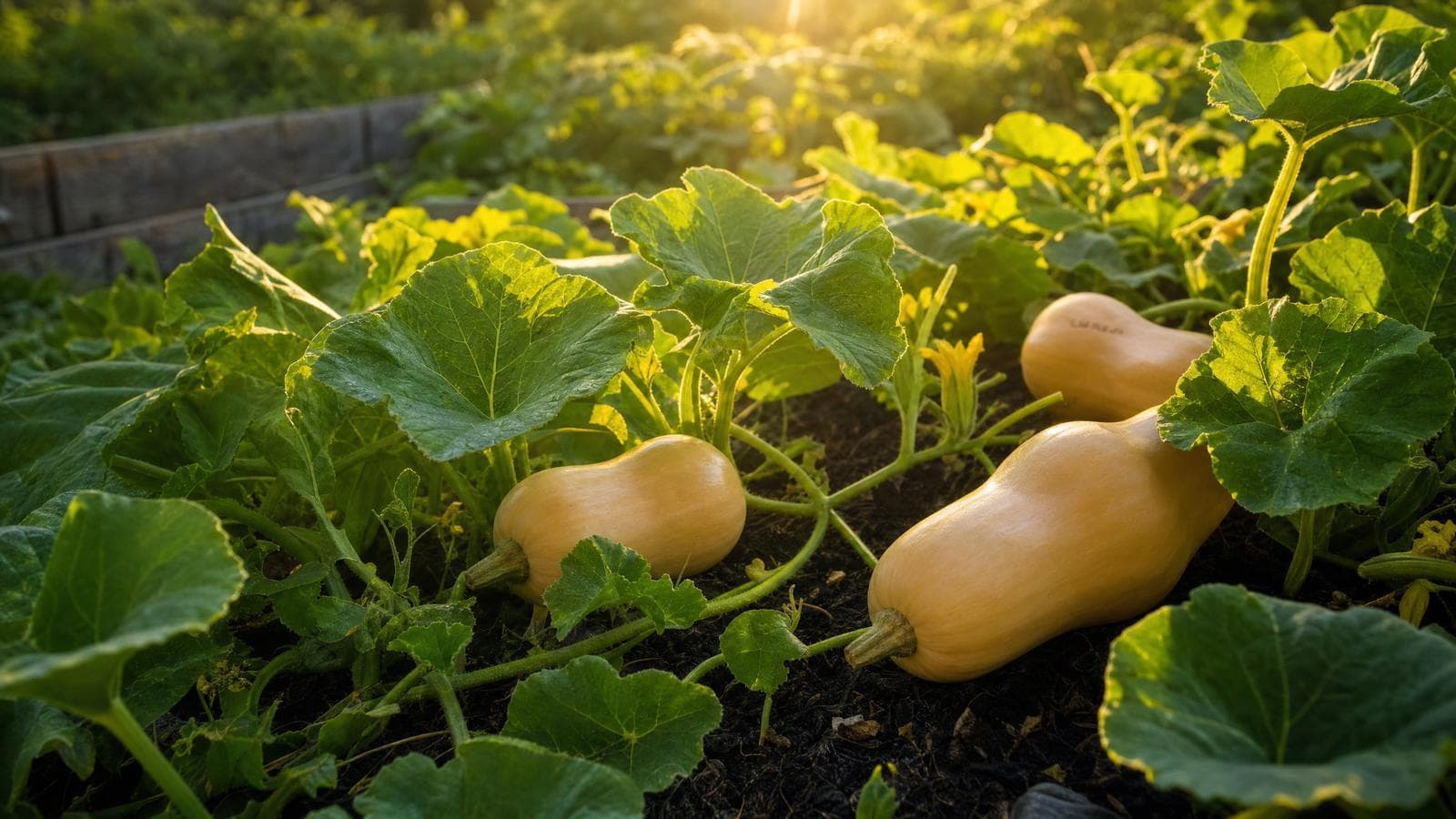
If you have ever bitten into a bowl of creamy, homegrown butternut squash soup on a crisp autumn evening, you already know why this is one of the most rewarding crops you can grow. Butternut squash is a long-season vegetable that you plant in early summer and harvest in fall, making right now — late May into early June — the absolute perfect time to get those seeds or transplants in the ground.
I will be honest with you: butternut squash does take up some real estate in the garden. The vines can sprawl 8 to 10 feet in every direction. But the payoff is enormous. A single well-tended plant can produce 3 to 5 large squash, each one lasting months in storage. It is one of the best "plant it and forget it" crops for the summer garden.
Why Grow Butternut Squash?
Beyond the incredible flavor, butternut squash is a nutritional powerhouse, loaded with Vitamin A, Vitamin C, potassium, and fiber. It stores beautifully in a cool, dry place for up to 3 months without any canning or freezing required. Plant it now, harvest it in September or October, and you will be eating from your garden well into winter.
Choosing the Right Variety
The classic "Waltham Butternut" is the gold standard for a reason: it is reliable, produces large fruits, and has excellent flavor. But there are some fantastic alternatives worth trying:
- Butterscotch is a compact, semi-bush variety that is perfect if you are short on space. It produces smaller, 1-2 pound fruits but is incredibly productive.
- Honeynut is a miniature butternut that has taken the foodie world by storm. Each fruit is about the size of a large pear, with an intensely sweet, nutty flavor. Perfect for roasting as individual servings.
- Waltham Butternut is the classic choice for maximum yield and long storage life.
When and How to Plant Butternut Squash
Butternut squash is a warm-season crop that absolutely hates frost. You want to plant after your last frost date has passed and the soil temperature is consistently at least 60°F — ideally 70°F. In most of the country, that window is right now, in late May through mid-June.
Direct Sow vs. Transplants: You can direct sow seeds right in the garden, or start transplants indoors 3-4 weeks before your planting date. If you are starting from seed directly in the garden, plant 2-3 seeds per hole about 1 inch deep, then thin to the strongest seedling once they sprout.
Spacing: This is where beginners often go wrong. Give each plant plenty of room. For traditional vining varieties, plant in hills (small mounds) spaced 4-6 feet apart, with rows 8-10 feet apart. If you are growing a compact variety like Butterscotch, you can get away with 3-4 feet between plants.
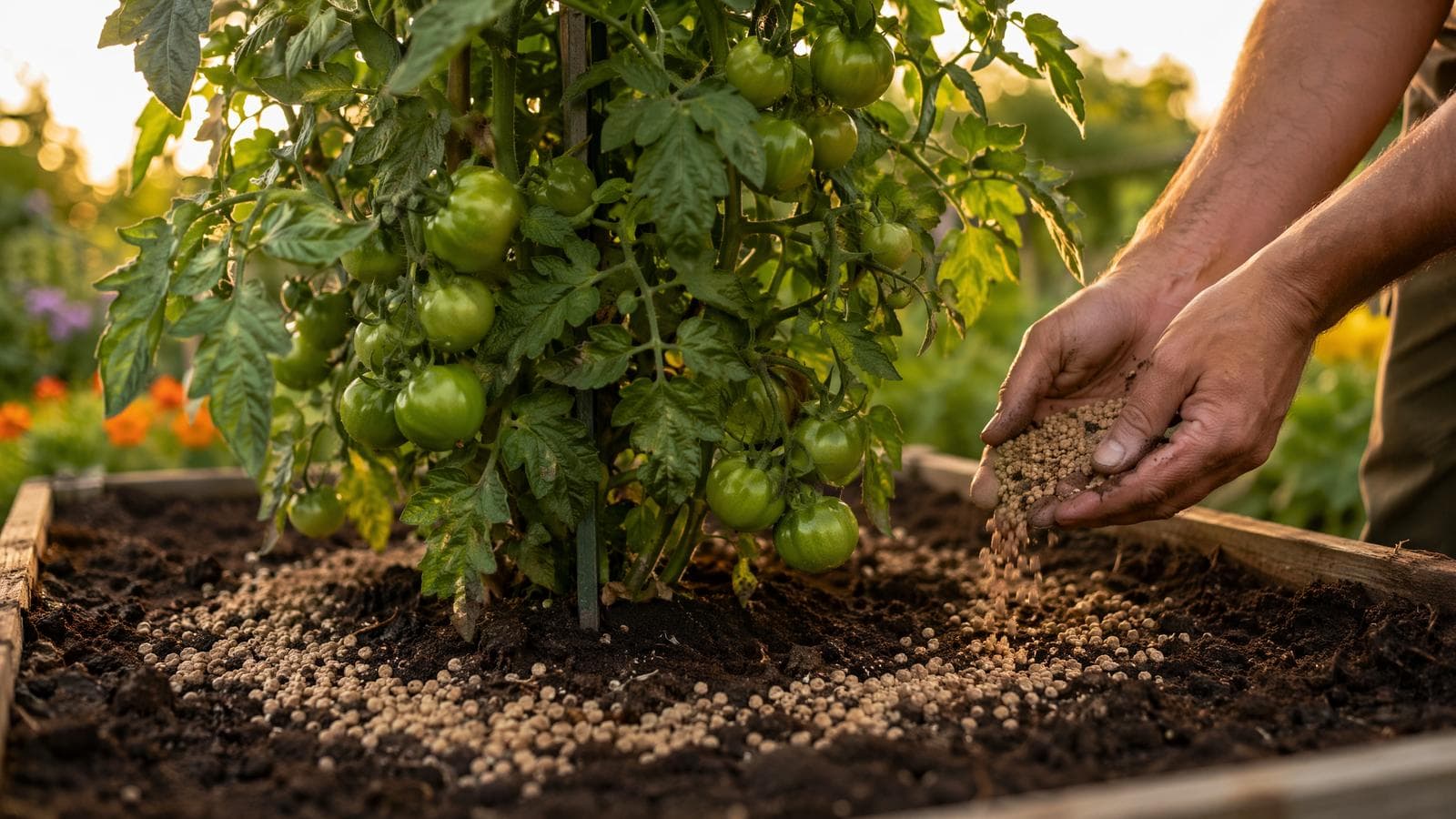
Soil Prep: Butternut squash is a heavy feeder. Before planting, work a generous amount of compost into the soil. If you want to give your plants a real head start, mix in a slow-release granular fertilizer at planting time.
Sunlight, Watering, and Feeding
Sunlight: Butternut squash needs full sun — at least 6-8 hours of direct sunlight per day. Do not try to tuck it in a shady corner. It will sulk and produce poorly.
Watering: Consistent moisture is key, especially when the plants are young and when the fruits are sizing up. Aim for about 1 inch of water per week. Water at the base of the plant, not overhead, to prevent powdery mildew on the leaves. A drip irrigation system is ideal for squash because it delivers water directly to the root zone and keeps the foliage dry.
Feeding: Once the plants start to vine out aggressively (about 3-4 weeks after planting), give them a boost of a balanced fertilizer. When you see the first flowers forming, switch to a fertilizer lower in nitrogen and higher in phosphorus and potassium to encourage fruit development rather than excessive leaf growth.
Pollination: The Secret to a Big Harvest
This is something a lot of first-time squash growers don't know: butternut squash produces separate male and female flowers on the same plant. Male flowers appear first, usually 1-2 weeks before female flowers. You can tell them apart easily — female flowers have a tiny, miniature squash at their base.
Bees are the primary pollinators, transferring pollen from the male to the female flowers. If you notice lots of flowers but no fruit setting, you may have a pollinator shortage. You can hand-pollinate by using a small paintbrush to transfer pollen from a male flower to the center of a female flower. This is a fun and effective trick!
This is also why planting a pollinator garden nearby is such a great investment for your vegetable garden.
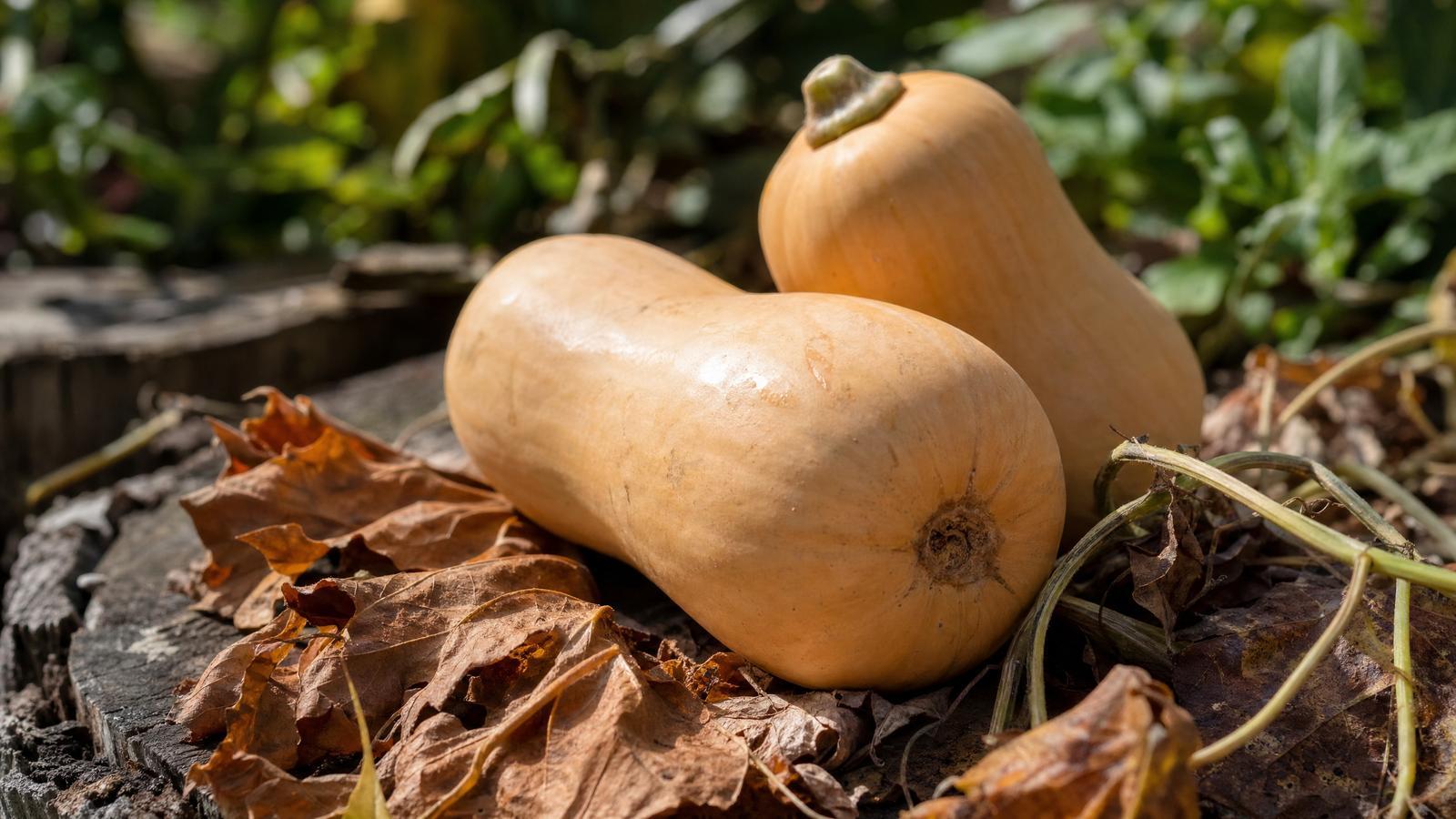
*Freshly harvested butternut squash. That tan, matte skin tells you they are fully cured and ready for long-term storage.*
Common Pests and Problems
Squash Vine Borer: This is the number one enemy of squash plants in the eastern United States. The adult moth lays eggs at the base of the stem, and the larvae bore inside, causing the vine to suddenly wilt and collapse. Prevention is key — row covers early in the season, or wrapping the base of the stem with aluminum foil, can deter egg-laying. Watch for frass (sawdust-like material) at the base of the stem as an early warning sign.
Squash Bug: These flat, grey-brown bugs suck the sap from leaves, causing them to wilt and turn brown. Check the undersides of leaves for clusters of bronze-colored eggs and crush them. Neem oil spray is effective against young nymphs.
Powdery Mildew: A white, powdery coating on the leaves is almost inevitable late in the season. It looks alarming but rarely kills the plant if the fruits are already sizing up. Good air circulation and avoiding overhead watering helps prevent it.
How to Know When Butternut Squash is Ready to Harvest
This is the question I get asked most often, and the answer is simpler than you might think. A butternut squash is ready to harvest when:
1. The skin has turned a uniform, deep tan color (no green streaks remaining).
2. The skin is hard enough that you cannot dent it with your fingernail.
3. The vine and stem near the squash have started to dry out and turn corky.
Use a sharp pair of pruning shears to cut the squash from the vine, leaving 2-3 inches of stem attached. Never pull or twist — you can damage the stem and shorten storage life.
Curing and Storing Your Harvest
After harvesting, cure your butternut squash by leaving it in a warm (80-85°F), dry place with good air circulation for 10-14 days. This hardens the skin and heals any small nicks, dramatically extending storage life. After curing, store in a cool (50-60°F), dry location. A basement shelf or a cool pantry is perfect. Properly cured butternut squash can last 3-6 months!
Let's Get Growing!
Butternut squash is one of those crops that rewards patience. You plant it in the heat of summer, tend it through the dog days of August, and then get to enjoy the fruits of your labor all the way through winter. There is something deeply satisfying about pulling a squash out of storage in January that you grew yourself.
Want help planning where to fit those sprawling vines in your garden layout? Try our Garden Designer to map out your space before you plant. Have questions about your specific growing conditions? Ask our Garden AI Chat for personalized advice. You can also visit our Shop for our favorite squash-growing tools, or check out our Plant This Month tool to see what else you should be getting in the ground right now.
Happy growing!
---
Frequently Asked Questions (FAQ)
How long does butternut squash take to grow from seed to harvest?
Most butternut squash varieties take 80-110 days from transplanting (or 100-120 days from direct seeding) to reach maturity. This is why it is important to get them in the ground in late May or early June — they need the full summer to develop.
Can I grow butternut squash vertically on a trellis?
Yes, with some support! A very sturdy trellis (think cattle panel or heavy-gauge wire) can support butternut squash vines. You will need to create slings out of old pantyhose or fabric to support the heavy fruits as they develop, otherwise the weight will snap the stem.
Why are my squash flowers falling off without producing fruit?
This is almost always a pollination issue. The first flowers to appear are always male flowers, which will fall off naturally since there are no female flowers yet to pollinate. Once female flowers appear (look for the tiny squash at the base), check for bee activity. If bees are scarce, try hand-pollinating with a small paintbrush.
Can I save seeds from my butternut squash for next year?
Yes! Scoop the seeds out of a fully ripe squash, rinse off the pulp, and let them dry completely on a paper towel for several weeks. Store in a cool, dry place in an envelope. Note that if you grew multiple squash varieties nearby, they may have cross-pollinated, so seeds from hybrid varieties won't grow true to type.
---
*Disclosure: As an Amazon Associate I earn from qualifying purchases. The links in this article are affiliate links, meaning I may earn a small commission if you purchase through them, at no extra cost to you. This helps support the site and keep the gardening tips coming!*
Ready to Design?
Upload a photo of your space and get beautiful, personalized design ideas in seconds.
Keep reading
Seasonal planting reminders and expert guides — free.