Blog
How to Grow Strawberries in Containers and Raised Beds: A Complete Summer Guide
Learn how to grow juicy, sweet strawberries in containers, pots, and raised beds this summer. Best varieties, soil tips, watering, and how to get the biggest harvest.
2026-05-30
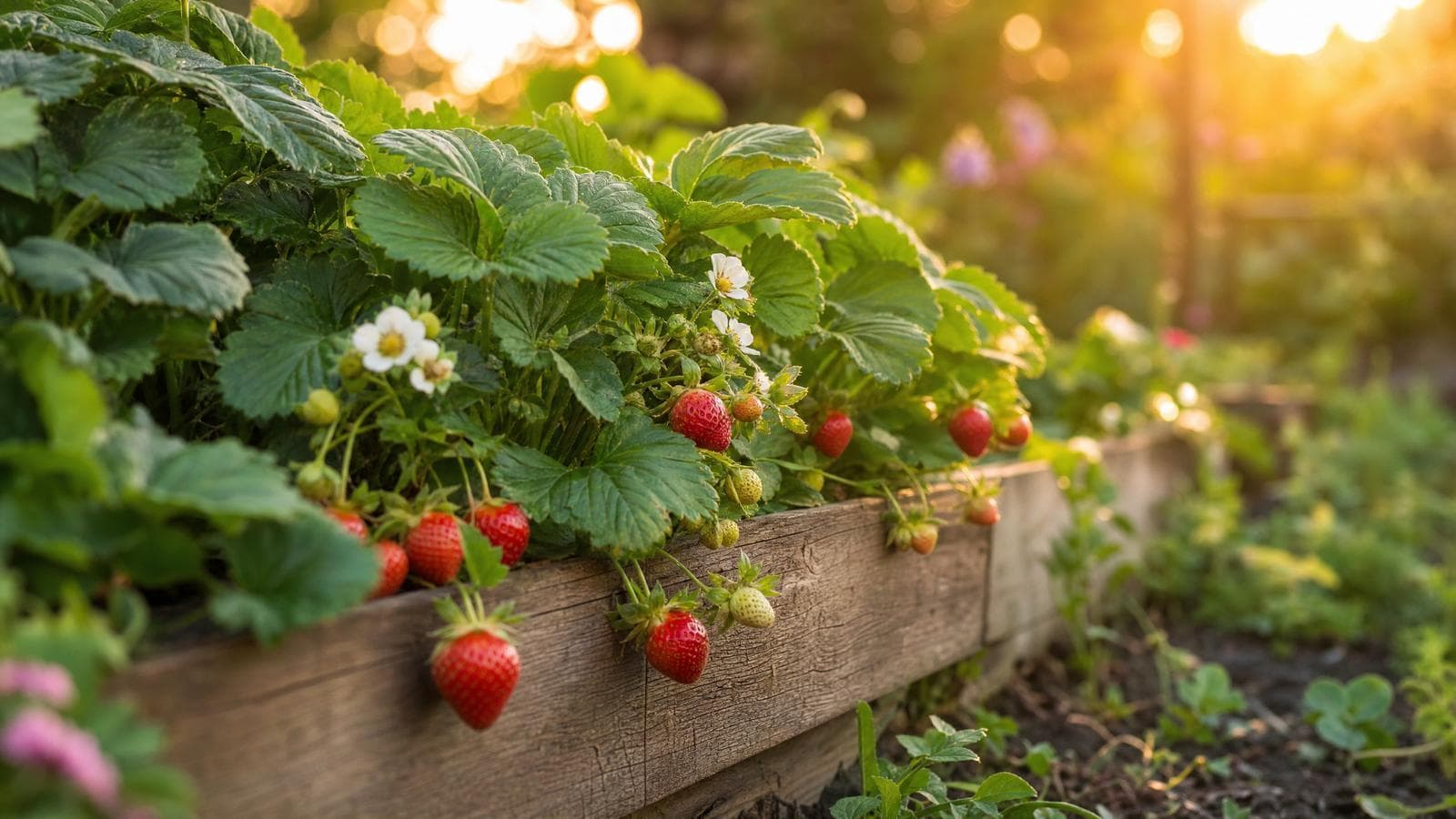
Is there anything better than stepping outside on a warm summer morning and picking a handful of sun-warmed strawberries straight from your own garden? I don't think so! Strawberries are one of the most rewarding crops a home gardener can grow, and the great news is that you absolutely do not need a big yard to do it. A container on a patio, a window box on a balcony, or a dedicated raised bed — strawberries thrive in all of these situations.
With late May and early June being the perfect time to get strawberry plants established for a summer harvest, let's dig into everything you need to know to grow the sweetest, most productive strawberry patch possible.
Choosing the Right Strawberry Variety
Before you buy a single plant, it helps to understand that not all strawberries are the same. There are three main types, and each has its own rhythm:
| Type | Harvest Pattern | Best For |
|---|---|---|
| June-bearing | One large crop in early summer | Preserves, jam, big harvests |
| Everbearing | Two crops (spring & fall) | Fresh eating, small spaces |
| Day-neutral | Continuous fruiting all season | Containers, consistent supply |
For most home gardeners growing in containers or small raised beds, I recommend day-neutral or everbearing varieties. They produce fruit steadily throughout the summer rather than dumping everything at once. Great varieties to look for include 'Seascape', 'Albion', 'Tristar', and 'Ozark Beauty'.
If you have a larger raised bed and want to make jam or freeze berries in bulk, a June-bearing variety like 'Earliglow', 'Honeoye', or 'Chandler' will give you an impressive single-season flush of fruit.
Growing Strawberries in Containers
One of my favorite things about strawberries is how beautifully they grow in pots. The cascading runners and hanging fruit look gorgeous on a patio or deck, and the elevated position makes harvesting a breeze.
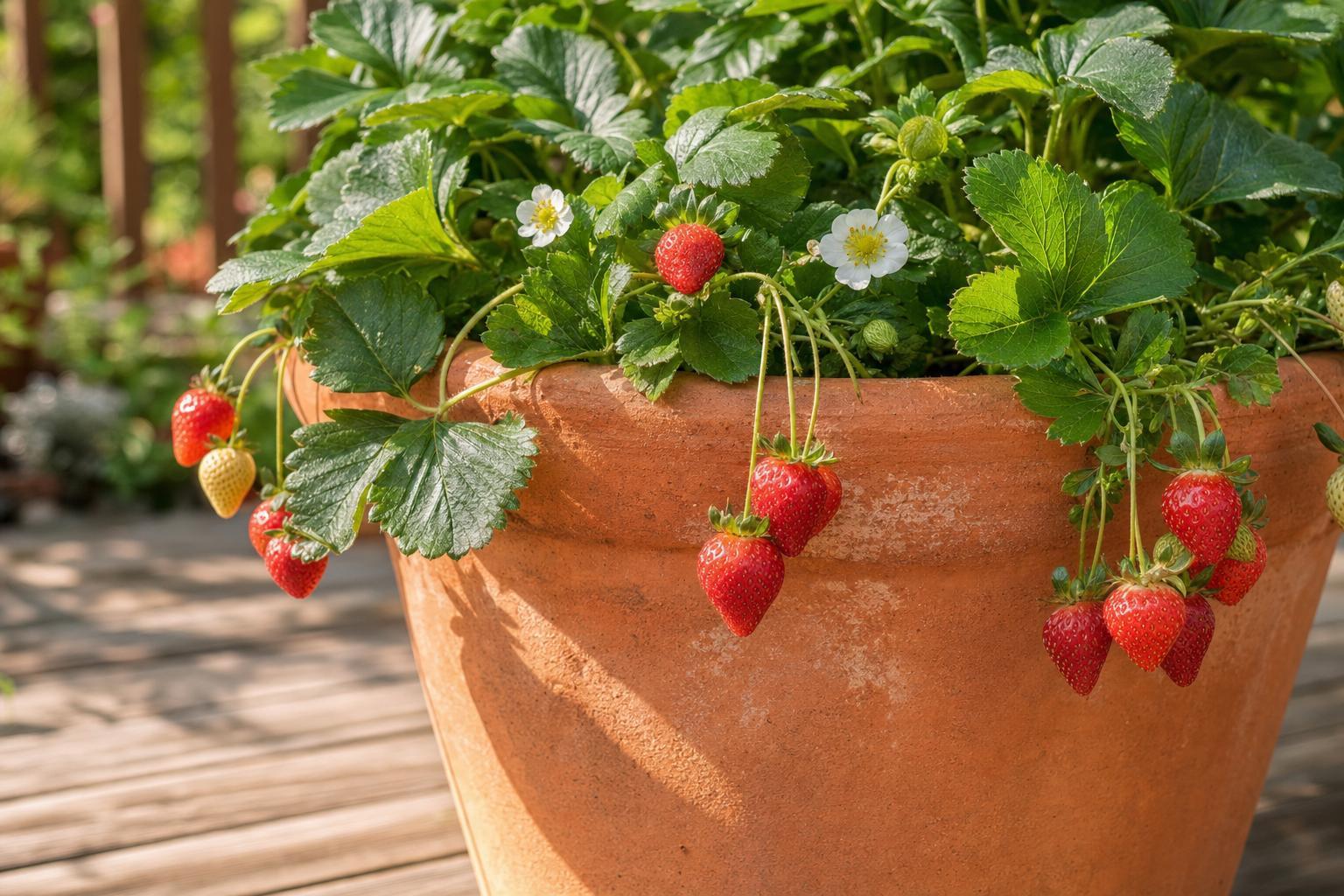
*Day-neutral strawberries thrive in containers and produce fruit continuously throughout the summer.*
Choosing the Right Container
The container is everything. Strawberries have a fairly shallow root system, but they need enough volume to stay consistently moist without becoming waterlogged. Here are my guidelines:
- Minimum size: 12 inches wide and 8 inches deep per plant.
- Best options: Terracotta pots (beautiful but dry out fast), fabric grow bags (excellent drainage and air pruning of roots), or purpose-built strawberry planters with side pockets.
- Drainage is non-negotiable: Every container must have drainage holes. Strawberries sitting in soggy soil will develop root rot within days.
A large fabric grow bag is one of the best investments you can make for container strawberries. They prevent overwatering, promote healthy roots, and are easy to move.
The Right Soil Mix for Container Strawberries
Never use plain garden soil in a container — it compacts, drains poorly, and will suffocate your plants. Instead, use a high-quality potting mix and amend it slightly for strawberries:
- Start with a premium all-purpose potting mix.
- Add a generous handful of perlite to every gallon of mix to improve drainage.
- Mix in some slow-release granular fertilizer at planting time.
- Strawberries prefer a slightly acidic pH of 5.5 to 6.5, so if your mix is too alkaline, a small amount of sulfur can help.
Growing Strawberries in Raised Beds
A dedicated raised bed for strawberries is a long-term investment that pays dividends for years. Once established, a healthy strawberry bed will produce fruit for three to five years before needing renovation.
Setting Up Your Raised Bed
Strawberries need full sun — at least 6 to 8 hours of direct sunlight per day. This is the single most important factor in getting sweet, flavorful fruit. A shaded plant will survive but produce small, pale, and disappointingly sour berries.
Prepare your raised bed soil by mixing in generous amounts of compost. Strawberries are heavy feeders and love rich, well-draining soil. A good rule of thumb is to incorporate at least 2 to 3 inches of compost into the top 8 to 10 inches of soil before planting.
Planting Depth: The Crown Rule
This is the single most common mistake new strawberry growers make. The crown — the central growing point where the leaves emerge from — must be planted at soil level. Not buried, not elevated. Right at the surface.
- If the crown is buried, the plant will rot.
- If the crown is too high, the roots will dry out.
Take your time to get this right with every single plant, and you'll be rewarded with vigorous, healthy growth.
Spacing
Plant strawberries about 18 inches apart in a raised bed to give each plant room to spread and produce runners. If you're using the matted-row system (allowing runners to fill in), you can start at 24 inches and let the plants colonize the space naturally over the season.
Summer Care: Watering, Feeding, and Mulching
Once your plants are in the ground, consistent care is what separates a mediocre harvest from an exceptional one.
Watering: Strawberries need about 1 to 1.5 inches of water per week. Consistent moisture is critical, especially when the fruit is developing. Inconsistent watering leads to small, misshapen, or hollow berries. A drip irrigation system or soaker hose is ideal, as it delivers water directly to the roots without wetting the foliage (which can encourage fungal disease).
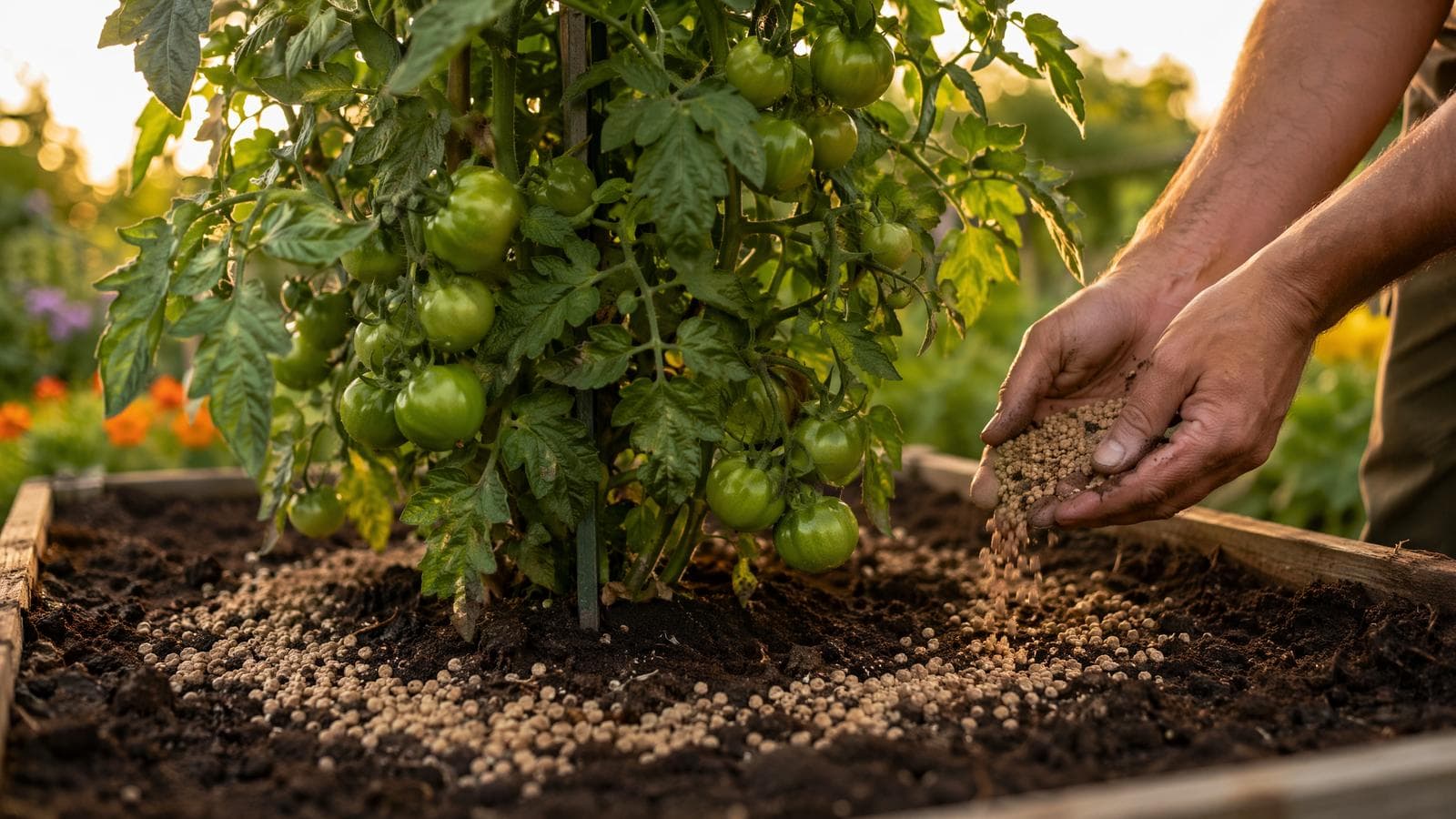
Feeding: After planting, wait until the plants are established and showing new growth before fertilizing. Use a balanced, low-nitrogen fertilizer or a fertilizer formulated specifically for berries and fruits. Too much nitrogen early on will push leafy growth at the expense of fruit. Once flowering begins, a potassium-rich fertilizer will support fruit development beautifully.
Mulching: Apply a layer of straw mulch around your plants (this is actually where the name "strawberry" is believed to come from!). Straw keeps the fruit clean and off the soil, retains moisture, and regulates soil temperature. Aim for a 2-inch layer, keeping the mulch away from the crowns.
Managing Runners
As the season progresses, your strawberry plants will send out long, horizontal stems called runners, each tipped with a tiny new plantlet. How you manage these runners depends on your goals:
- For maximum fruit production this year: Pinch off all runners as they appear. This forces the plant's energy into fruit production rather than reproduction.
- For expanding your patch: Allow a few runners per plant to root into the soil. Once rooted, you can sever the runner from the mother plant and transplant the new plantlet to expand your bed.
Common Problems and How to Handle Them
Even the most attentive gardener will encounter a few challenges with strawberries. Here's what to watch for:
Birds and slugs are the most common pests. A simple bird netting draped over the bed is the most effective solution for birds. For slugs, set out shallow traps filled with beer near the plants, or use an iron phosphate-based slug bait, which is safe for pets and wildlife.
Gray mold (Botrytis) is a fungal disease that causes fruit to rot. It thrives in humid, still conditions. Prevent it by ensuring good air circulation between plants, watering at the base, and removing any damaged or overripe fruit promptly.
Powdery mildew can appear on the leaves in hot, dry conditions. Ensure adequate watering and consider a neem oil spray as a preventative measure.
Plan Your Perfect Strawberry Setup
Growing strawberries is one of the most joyful things you can do in a summer garden. Whether you have a sprawling raised bed or a single pot on a balcony, there is a method that will work for your space.
Want help designing the perfect layout for your strawberry bed alongside your other summer crops? Try our Garden Designer to map it all out visually. If you have questions about specific varieties for your climate or region, our Garden AI Chat can give you personalized recommendations in seconds. Browse our Shop for our favorite strawberry-growing supplies, and check out our Plant This Month tool to see what else you should be getting in the ground right now!
Happy growing — and happy eating!
***
Frequently Asked Questions (FAQ)
Can I grow strawberries from seed?
Technically yes, but it's very slow and difficult. Most gardeners buy bare-root plants or plugs from a nursery, which will produce fruit much faster. Seeds can take up to two years to produce a meaningful harvest.
How long do strawberry plants last?
A well-maintained strawberry plant is most productive in its second and third years. After three to five years, production declines and it's time to renovate the bed with new plants (ideally rooted from your own runners).
Why are my strawberries small and tasteless?
The most common culprits are insufficient sunlight, inconsistent watering, or overcrowding. Strawberries need full sun to develop sweetness. Also, make sure you are thinning runners and not letting the bed get too crowded, as competition for nutrients will reduce fruit size and quality.
When should I pick strawberries?
Pick strawberries when they are fully red all the way to the tip — including the very bottom point. A strawberry that is white or pale at the tip is not yet fully ripe and will be sour. Harvest in the morning when the fruit is cool for the best flavor and shelf life.
***
*Disclosure: As an Amazon Associate I earn from qualifying purchases. The links in this article are affiliate links, meaning I may earn a small commission if you purchase through them, at no extra cost to you. This helps support the site and keep the gardening tips coming!*
Ready to Design?
Upload a photo of your space and get beautiful, personalized design ideas in seconds.
Keep reading
Seasonal planting reminders and expert guides — free.